
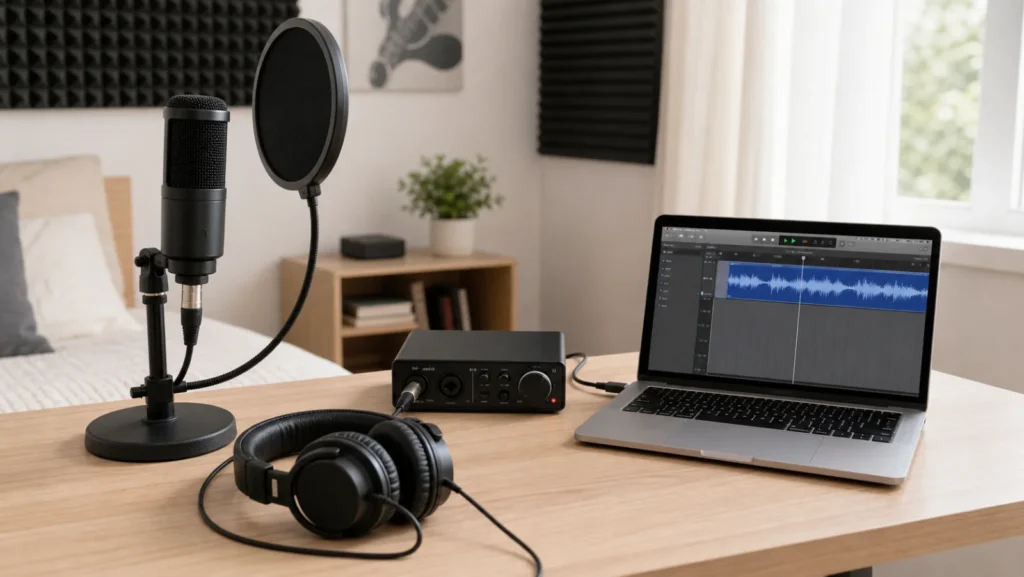
Short Answer
No, you do not need acoustic foam to start recording vocals at home. Acoustic foam can reduce some bright reflections, but it does not solve every room problem and it does not soundproof your room. Most beginners should first test mic placement, room position, headphone bleed, gain, and background noise before buying panels.
Review basis: MusicalCritic editorial setup logic checked 2026-07-17. This page does not claim acoustic lab measurement, live price, stock, ranking, or brand authorization.
What acoustic foam actually helps with
Acoustic foam can help reduce some high-frequency reflections from hard walls, bare corners, desks, and nearby surfaces. If your vocal sounds sharp, splashy, or obviously reflective, a few well-placed treatment pieces may help after you find a decent recording spot.
Foam is not magic. It will not make a noisy room quiet, remove traffic noise, stop a computer fan, or turn a bad mic position into a good one. It is room treatment, not soundproofing.
What to fix before buying foam
- Move the microphone: a small distance change can improve the sound more than cheap panels.
- Try different room spots: compare a bedroom corner, a softer area, and a spot away from bare walls.
- Control gain: clipping or noisy gain settings can sound like a room problem.
- Check headphones: loud headphones can leak into the mic and confuse your test.
- Listen for noise vs reflection: foam may reduce reflections, but it will not block neighbors, traffic, or HVAC noise.
When foam is the wrong first purchase
Foam is the wrong first purchase if your main problem is outside noise, headphone bleed, bad mic distance, clipping, or a vocal that sounds too close and boomy. In those cases, start with the practical setup fixes in How to Place a Microphone for Better Vocals and How to Stop Headphone Bleed in Vocal Recordings.
If your recordings sound small and closed-in, read Why Do Home Vocals Sound Boxy?. If you are recording in a closet, check Is a Closet Good for Recording Vocals at Home?.
When treatment can be worth considering
Room treatment becomes more useful after you have a repeatable recording position and can hear the same reflection problem in several test takes. At that point, targeted soft material near reflection points can help more than randomly covering every wall.
Beginners should keep the goal simple: make the vocal clearer and easier to mix, not build a perfect studio. If the room is usable, your next money may be better spent on a stable mic stand, pop filter, closed-back headphones, or the right microphone for your voice and space.
What to buy before acoustic foam
Before buying panels, make sure the basic chain is not the problem. Use the Beginner Vocal Recording Setup Checklist and Home Vocal Recording Setup Under $200.
If accessories are missing, see Best Pop Filters and Shock Mounts for Beginner Vocals. If the microphone choice itself is the issue, start with Is a Dynamic Microphone Better for Bedroom Vocals?.
FAQ
Does acoustic foam block noise?
No. Acoustic foam is not soundproofing. It can reduce some reflections inside the room, but it does not reliably block traffic, neighbors, appliances, or outside sound.
Can I use blankets instead of acoustic foam?
Blankets can help soften some reflections for temporary beginner tests, especially when placed thoughtfully. They are not a full acoustic design, but they can help you learn whether reflections are the real problem.
How much foam do I need for vocals?
There is no universal amount for every room. Start by testing the room and microphone position first. If treatment is clearly needed, use targeted placement rather than covering walls blindly.
Next steps
If you are still building the whole setup, start at the home vocal recording hub. If you are deciding whether the problem is the room, mic, or interface, read Do You Need an Audio Interface to Record Vocals at Home?.