
Short Answer
A closet can be useful for quick home vocal demos, but it is not always the best place to record vocals. Hanging clothes can soften some reflections, but a tight closet can also make vocals sound boxy, dull, and cramped. For many beginners, a quiet bedroom corner with better mic placement is easier to control than a tiny closet.
Review basis: MusicalCritic editorial setup logic checked 2026-07-17. This page does not claim acoustic lab measurement, live price, stock, ranking, or brand authorization.
When a closet can help
A closet can help if the rest of your room is very reflective, noisy, or hard to control. Soft clothes can reduce some slapback reflections, and the smaller space may feel easier for a beginner to set up. It can be acceptable for rough demos, guide vocals, songwriting notes, and practice takes.
The closet is most useful when it is quiet, has soft material around the singer, and gives enough space to keep the microphone at a comfortable distance. If you have to stand too close to the mic or sing into hard doors and walls, the benefit drops quickly.
When a closet makes vocals worse
A closet can make vocals worse when it is too small, too reflective in one direction, or packed in a way that traps low-mid energy. That is when vocals can sound muffled, nasal, or boxed in. If your first recordings sound like they are coming from inside a small cabinet, the closet is probably not helping.
If this is the problem you hear, read Why Do Home Vocals Sound Boxy? before buying another microphone.
What to test before buying more gear
- Record the same line in three places: closet, bedroom corner, and a spot away from bare walls.
- Keep the microphone distance consistent: changing distance can fool you into blaming the room.
- Listen for boxiness, echo, and background noise: each space may fail for a different reason.
- Check headphone bleed: loud headphones can leak into the mic even in a soft closet.
- Use the same gain setting: avoid comparing one clean take to one clipped or noisy take.
Better beginner setup options
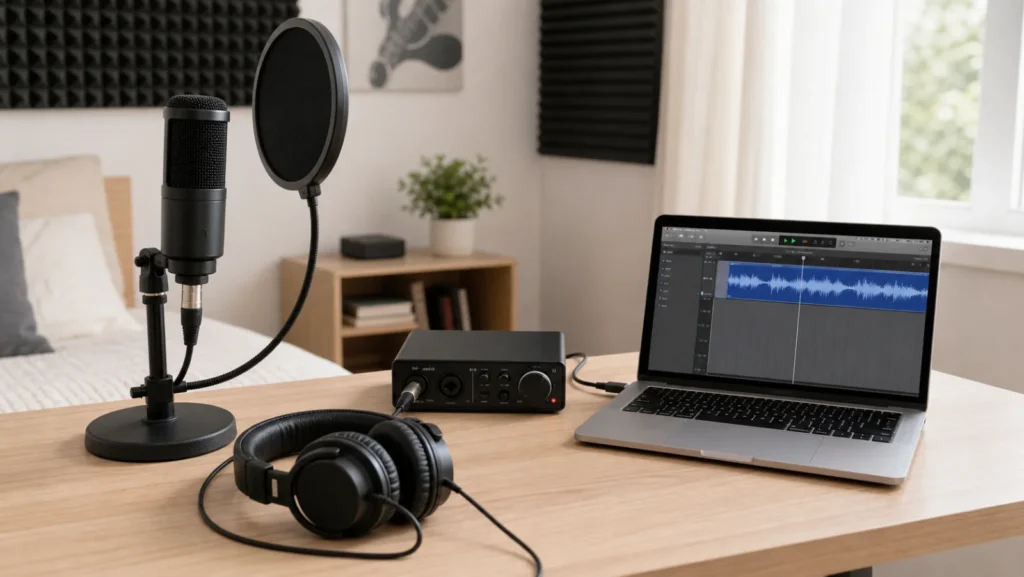
If the closet sounds dull, try a normal room position first. Face away from hard corners, keep the mic away from walls, use a pop filter, and record at a sensible distance. The How to Place a Microphone for Better Vocals guide is the first fix to try.
If headphone sound is leaking into the microphone, use How to Stop Headphone Bleed in Vocal Recordings and Best Closed-Back Headphones for Beginner Vocal Recording.
Gear that helps only after the room choice is reasonable
More gear helps most when the recording spot is already usable. A dynamic microphone can be forgiving in some bedroom setups, but it still needs good distance, gain, and performance. See Is a Dynamic Microphone Better for Bedroom Vocals? and Best Microphones for Bedroom Vocals Under $150.
For accessories, start with the practical basics in Best Pop Filters and Shock Mounts for Beginner Vocals. Do not expect a pop filter or shock mount to fix a bad closet tone by itself.
FAQ
Should I record vocals in a closet or bedroom?
Use whichever space sounds clearer in a short test. A quiet bedroom corner can beat a cramped closet if the closet makes the vocal sound boxy or muffled.
Do clothes improve vocal recordings?
Clothes can soften some reflections, but they do not turn every closet into a good vocal booth. The size, shape, hard surfaces, mic distance, and noise floor still matter.
Can better gear fix a bad closet recording?
Not reliably. A better microphone or interface can improve parts of the chain, but it cannot fully remove a cramped room tone. Fix placement and room choice first.
Next steps
Start with the Beginner Vocal Recording Setup Checklist and Home Vocal Recording Setup Under $200. If you are still choosing the full signal path, read Do You Need an Audio Interface to Record Vocals at Home? or return to the home vocal recording hub.