
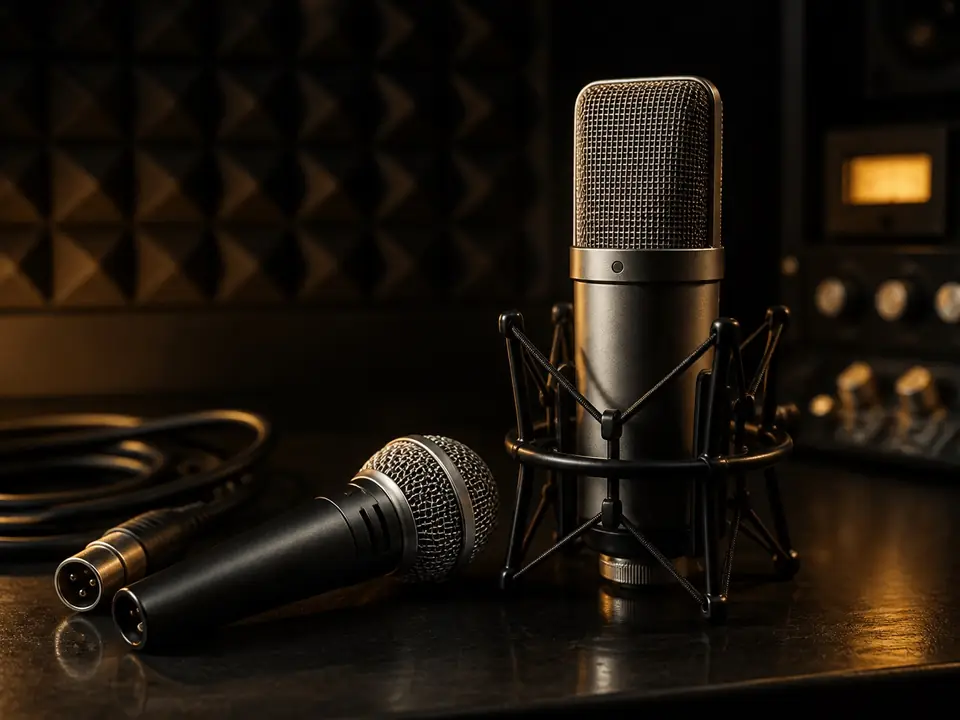
Short answer: A dynamic microphone is often better for beginner bedroom vocals if your room is untreated, noisy, or reflective. It is not automatically more detailed than a condenser microphone, but it usually rejects more room sound and makes it easier to get a usable vocal take without buying acoustic treatment first.
When a dynamic microphone is the better choice
Choose a dynamic microphone first when your bedroom has hard walls, computer fan noise, street noise, or a lot of echo. Dynamic vocal microphones such as the Shure SM58-style family are designed to work close to the singer, so the direct voice can be stronger than the room sound.
- You record in a small untreated bedroom or apartment.
- You sing close to the mic and can keep a consistent distance.
- You need a forgiving first setup more than maximum top-end detail.
- You want to avoid buying acoustic panels before you know your workflow.
When a condenser microphone can still be better
A condenser microphone can be the better tool when the room is quieter, the singer wants a more open and detailed sound, and the recording chain includes phantom power. The tradeoff is that a condenser often hears more of the room, keyboard clicks, HVAC noise, and harsh reflections.
If your bedroom already sounds controlled, or you are recording softer vocals, acoustic guitar, and detailed demos, compare dynamic and condenser options before buying. The key question is not which technology is more professional. The key question is which one gives your voice a clean enough result in your actual room.
Quick decision rule for beginners
| Your situation | Better first choice | Why |
|---|---|---|
| Echoey bedroom, no treatment | Dynamic microphone | Less room sound and easier close-mic control |
| Quiet treated room | Condenser microphone | More detail if the room does not get in the way |
| Loud vocals or rap close to the mic | Dynamic microphone | Handles close vocal work well and is forgiving |
| Soft vocals, acoustic demos, detailed tone | Condenser microphone | Captures more nuance when noise is controlled |
What beginners should buy with it
If you choose a dynamic XLR microphone, remember that the microphone is only one part of the chain. You still need an audio interface, XLR cable, stand or boom arm, headphones, and usually a pop filter or foam windscreen. If you want the simplest path, a USB microphone can work, but an XLR dynamic setup gives more upgrade room.
Best next step
Start with the home vocal recording guide if you are building the whole setup. If you are deciding between mic types, read dynamic vs condenser microphones for vocals. If your main problem is room sound, compare microphones for untreated rooms and then check mic placement for better vocals.
FAQ
Do dynamic microphones need phantom power?
Most passive dynamic microphones do not need phantom power. Some active dynamic or inline booster setups may need power, so check the specific model and signal chain.
Will a dynamic microphone make my vocals sound dull?
It can sound darker than a condenser, especially if you sing off-axis or too far away. Better mic placement and a clean gain setting matter more than buying a brighter microphone too early.
Is a condenser microphone bad for bedrooms?
No. A condenser is not bad for bedrooms, but it is less forgiving when the room is noisy or reflective. If your room sounds poor, the extra detail may capture more problems.
How We Test
Editorial research and beginner workflow guidance based on close-mic vocal recording constraints, room-noise behavior, and existing MusicalCritic microphone coverage.
Review Basis
Editorial research; no claim of hands-on lab measurement for this FAQ.