
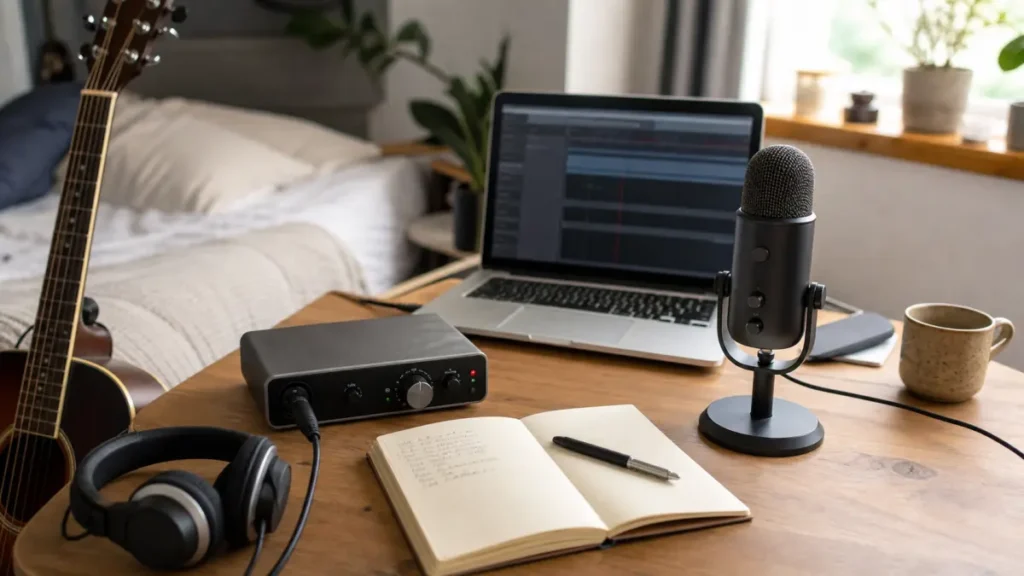
A USB mic is the simpler first purchase if you only need quick vocal demos. An entry audio interface is usually the better long-term path if you record vocals plus guitar, piano, synths or multiple sources. Singer-songwriters should choose based on workflow, not just microphone price.
MusicalCritic may earn a commission from qualifying links. This page uses official source boundaries and editorial workflow guidance; it does not track live offers, availability or retailer ratings.
Quick Answer
Choose a USB mic if your whole setup is one voice, one desk and one computer. Choose an entry audio interface if you want to use XLR microphones, plug in an instrument, monitor with lower latency or upgrade one piece at a time.
When A USB Mic Makes Sense
- You record scratch vocals, melody ideas, lessons, voice notes or simple acoustic demos.
- You do not own an XLR mic or instrument cable setup yet.
- You want fewer cables and fewer settings.
- You are okay replacing the whole mic path later if your needs grow.
When An Entry Interface Makes More Sense
- You want to record vocal and guitar parts with separate sources.
- You plan to try different XLR microphones.
- You need direct monitoring through headphones while recording.
- You want an upgrade path where the mic, headphones and interface can change separately.
The Singer-Songwriter Workflow Difference
The biggest difference is not “better sound” in the abstract. It is routing. A USB mic is one self-contained recording device. An interface is a small hub: it can take a mic signal, sometimes an instrument signal, feed headphones and send audio to the computer. That matters when a song idea includes vocal, acoustic guitar, electric guitar DI, MIDI keys or layered harmonies.
Do Not Overbuy Too Early
Many beginners buy more interface channels than they use. If you record one vocal at a time, a simple one-mic-input interface can work. If you want vocal and guitar at once, look for two useful inputs and a headphone output that gets loud enough for your headphones. Avoid paying for features you cannot explain yet.
Decision Table
| Situation | Better fit | Reason |
|---|---|---|
| Only quick vocals at a desk | USB mic | Fastest setup and fewer parts. |
| Vocal plus guitar ideas | Entry interface | More flexible input path. |
| Planning to upgrade mics | Entry interface | XLR mics can be swapped later. |
| Portable voice notes | USB mic | Less gear to carry. |
Beginner Buying Checklist
- Write down what you record today: voice only, voice plus guitar, or full demos.
- Check whether you need XLR, instrument input, headphone monitoring or MIDI.
- Budget for the missing parts: mic cable, stand, pop filter and closed-back headphones.
- Do not treat USB vs interface as permanent. Pick the path that solves the next six months.
Read Next
- Home Vocal Recording for Beginners
- USB Mic vs XLR Interface for Bedroom Vocals
- Best Entry Audio Interfaces for Vocalists
FAQ
Can a USB mic record singer-songwriter demos?
Yes, especially for one-at-a-time vocal or acoustic ideas. It becomes limiting when you need separate input control or want to change microphones.
Does an audio interface always sound better?
No. A poor room, bad mic placement or clipping can ruin either path. The interface mainly adds flexibility and upgrade options.
Can I use both?
You can own both, but a USB mic usually does not plug into an audio interface as an XLR mic. It connects directly to the computer by USB.