
Decision Scorecard
| Decision Point | Best Fit | What To Check |
|---|---|---|
| Primary use case | Choose around the job you do most often. | Vocals, instruments, practice, monitoring, recording, or live use. |
| Setup complexity | Choose the simpler setup when performance is close. | Cables, software, stands, power, and compatibility. |
| Upgrade path | Choose the option that will stay useful longer. | Whether it still works when your setup grows. |
| Value | Choose the lower total cost, not only lower sticker price. | Accessories and replacement risk matter. |
Pros & Cons
Pros
- Frames the decision around use cases.
- Clarifies who should buy each option.
- Surfaces tradeoffs that spec tables often hide.
Cons
- There may not be one universal fit.
- A third alternative may be better if neither option matches your workflow.
Who It Is For
This comparison is for readers choosing between two close products and needing a clear decision path before buying.
Who Should Avoid It
Avoid forcing this decision if neither product matches your room, instrument, skill level, compatibility needs, or budget.
Alternatives
- Check a category buying guide for a broader shortlist.
- Read individual reviews if one option seems stronger.
- Look at accessories if setup cost is driving the decision.
Final Verdict
Pick the option that solves your main job with the least friction. If neither does, step back to the category guide before buying.
FAQ
How do I choose between two similar products?
Start with your main use case, then compare setup needs, reliability, and total cost.
Should I buy the more expensive option?
Only when the extra cost solves a real problem you will notice in use.
Beginner XLR Setup Comparison
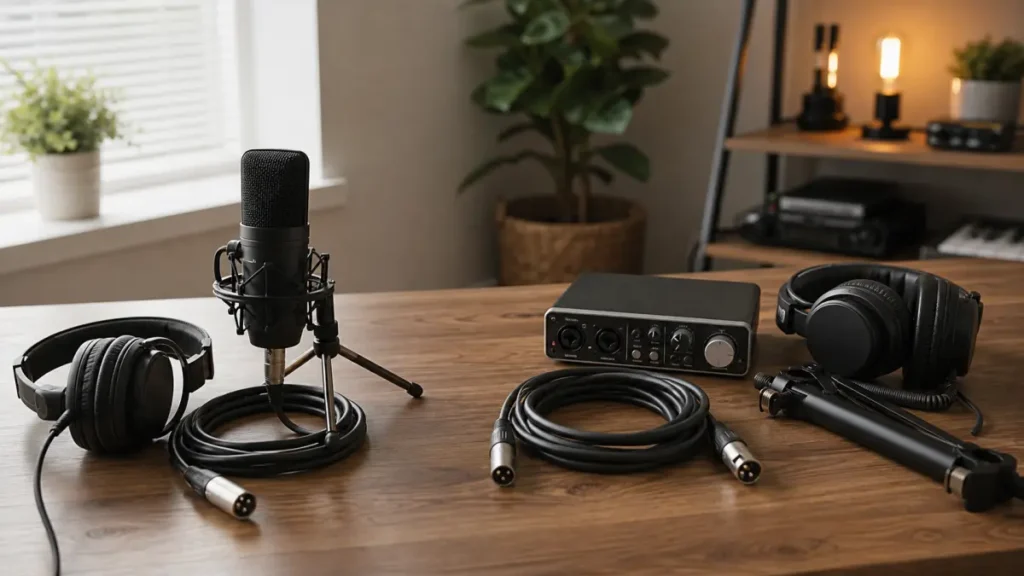
Answer first: An XLR microphone bundle is simpler when you want one box and fewer decisions. Buying a separate interface, microphone and accessories gives you more control and a clearer upgrade path. The better choice depends on what is actually included, not just the headline bundle name.
MusicalCritic may earn a commission from qualifying links. This comparison uses source-backed setup guidance and editorial accessory analysis, not lab bundle testing or real-time offer tracking.
This comparison uses official product examples and editorial setup analysis. It does not claim a universal cheaper option or track real-time offers.
Quick Decision Table
| Need | XLR bundle | Separate interface path |
|---|---|---|
| Fast first setup | Usually easier. | Requires more choices. |
| Upgrade flexibility | Depends on the included parts. | Usually clearer. |
| Accessory certainty | Only if the bundle includes the right cable, stand, mount and headphones. | You choose every missing piece. |
| Learning signal flow | Can hide some decisions at first. | Teaches the chain more clearly. |
| Bedroom vocal focus | Good if the mic and headphones fit close vocal work. | Better when you already know your room and mic needs. |
Choose a Bundle If
- You need a working vocal path quickly.
- The included mic, interface, cable and headphones match your actual use.
- You do not already own compatible accessories.
- You are comfortable replacing one part later if it becomes the weak link.
Choose Separate Pieces If
- You already own one or more useful accessories.
- You want to choose a specific microphone for your room.
- You care about interface features such as inputs, monitoring and headphone output.
- You expect to upgrade the mic or interface independently.
Hidden Checklist
- XLR cable
- Audio interface with compatible mic input
- Stand or boom arm
- Pop filter or windscreen if plosives appear
- Closed-back headphones for tracking
- Computer connection and recording software
Beginner Mistakes
- Buying an XLR microphone with no interface.
- Assuming every bundle includes a usable stand.
- Ignoring headphones until the first vocal take.
- Choosing a condenser bundle for a noisy or reflective room without a plan.
Read Next
- Home Vocal Recording for Beginners
- Audio-Technica AT2020 Review for Bedroom Vocals
- How to Choose a Vocal Mic for a Small Room
FAQ
Is an XLR bundle better for beginners?
It can be better if the included parts fit your use. It is not automatically better than choosing separate pieces.
Do XLR microphones need an interface?
Yes. A normal XLR microphone needs a compatible recording path such as an audio interface, mixer or recorder.
What should beginners check first?
Check the complete chain: microphone, interface, cable, stand, headphones and computer connection.