
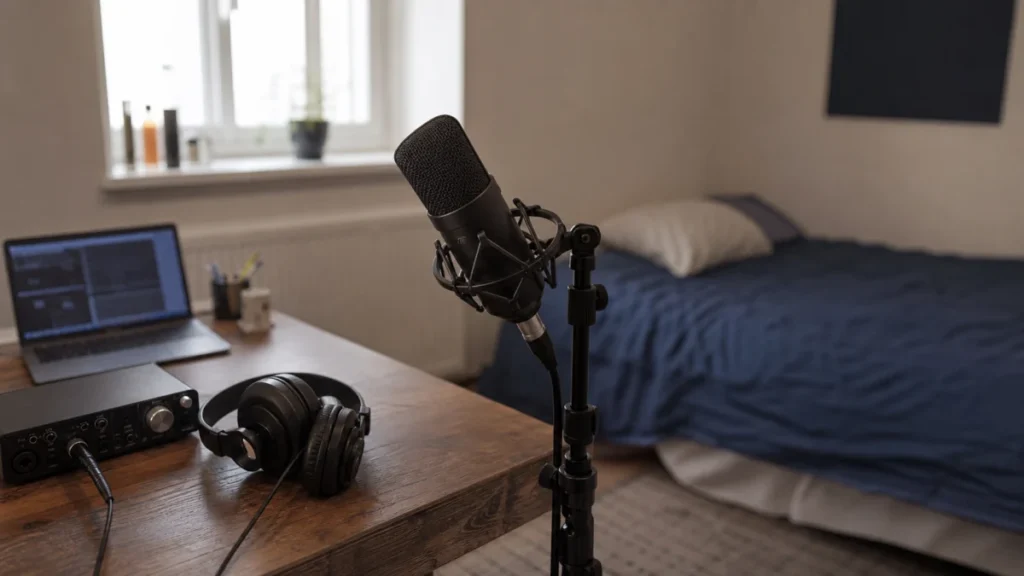
Small Room Vocal Setup
Answer first: Choose a vocal mic for a small room by starting with the room problem, not the spec sheet. If the room is noisy, reflective or shared with a desk and bed, a controlled dynamic or close-working USB/XLR setup may be easier than a sensitive condenser placed far away.
MusicalCritic may earn a commission from qualifying links. This guide uses source-bound setup logic and editorial buyer analysis. It does not claim lab testing, retailer availability tracking or a universal best microphone for every room.
Start With the Room
| Room signal | Safer first direction | Why |
|---|---|---|
| Fan, street or computer noise | Closer mic position and controlled pickup | Less room sound reaches the vocal take. |
| Hard walls and bare corners | Dynamic or carefully placed condenser | The setup must reduce reflections before tone chasing. |
| One-person beginner workflow | USB for simplicity or XLR for upgrades | The recording path matters as much as the microphone. |
| Plans to upgrade later | XLR mic plus interface | You can change either part later. |
Dynamic vs Condenser in a Small Room
A condenser can sound detailed in a controlled space, but it can also reveal more room tone. A dynamic vocal mic can be more forgiving when the room is untreated, but it still needs good distance, gain and performance technique.
USB vs XLR
USB is simpler when you only need one mic into one computer. XLR adds an interface, cable and gain staging, but gives more room to change microphones or monitoring later.
Beginner Buying Checks
- Will the mic work at your real singing distance?
- Do you need an interface, phantom power or a headphone output?
- Can your stand hold the mic safely?
- Will a pop filter or windscreen fit the setup?
- Can you record quietly enough without overloading the input?
Do Not Choose By Specs Alone
Frequency response, polar pattern and sensitivity can help, but beginners usually get better results by matching the microphone path to the room, distance, stand, headphone and interface chain.
Read Next
- Home Vocal Recording for Beginners
- Dynamic Mic vs Condenser Mic for Bedroom Vocals
- USB Mic vs XLR Mic for Home Vocals
- Best Vocal Microphone Bundles for Beginners
FAQ
Is a condenser mic bad for a small room?
No. It can work, but it needs careful placement and room control. A beginner should not assume more sensitivity means better vocal results.
Is a dynamic mic always better for bedrooms?
No. It can be more forgiving, but poor technique, too much gain or bad monitoring can still create weak recordings.
Should a beginner buy USB or XLR first?
USB is simpler. XLR is more flexible when the beginner is ready to manage an interface, cable and gain staging.