
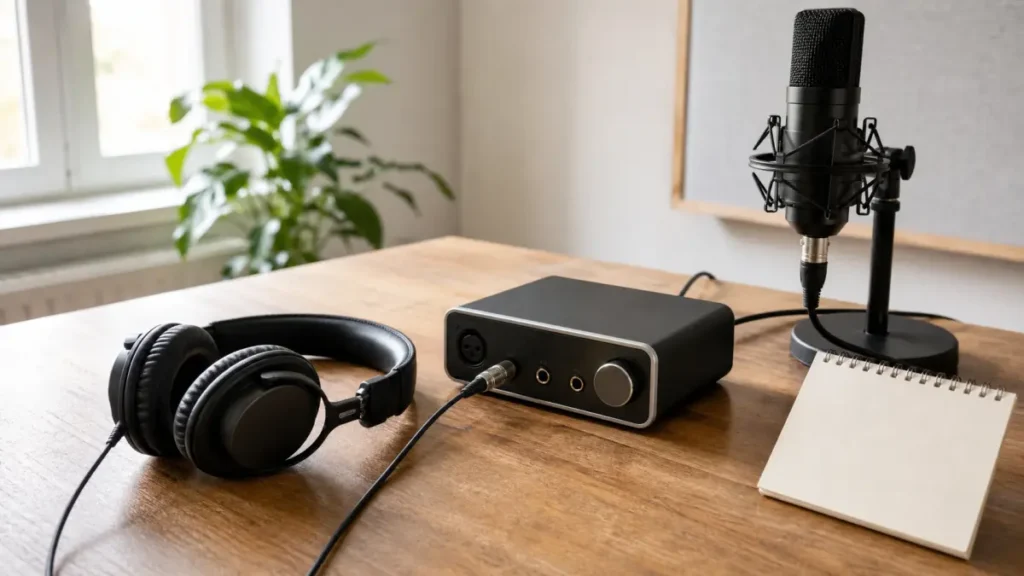
Beginner Recording Workflow
Answer first: Use direct monitoring by listening to the live microphone signal from your interface while recording, then avoid enabling a second delayed software-monitoring path in the DAW. If the vocal sounds doubled, echoey or late, check the monitoring path before blaming the microphone.
MusicalCritic may earn a commission when readers buy through qualifying links. This guide is workflow guidance based on editorial research and common beginner recording setups. It does not claim measured latency, universal buffer settings or interface-specific instructions.
What Direct Monitoring Actually Does
Direct monitoring lets you hear the incoming microphone signal before it travels through the full recording software path. That can make vocal tracking feel more immediate, especially for beginners who hear a distracting delay while singing.
The important point is not the label on the interface. The important point is whether you are hearing one clean monitoring path or two paths at once.
Set Up One Clean Monitoring Path
- Plug closed-back headphones into the interface or the approved headphone output for your setup.
- Set the microphone input gain with the singer’s loudest phrase before recording the full take.
- Turn on the interface’s direct-monitoring path if your interface provides one.
- In the DAW, avoid also monitoring the same live input through a delayed software path unless you intentionally need that route.
- Balance the backing track against the live vocal so the singer can perform without pushing too hard.
- Record a short test take and listen for echo, doubled sound, clipping and headphone bleed.
Signs You Have Double Monitoring
- The vocal sounds like two copies are slightly apart.
- The singer hears a slapback-style delay while recording.
- The recorded file is clean, but the headphone cue feels late or confusing.
- Turning off one monitor button suddenly makes the cue feel clearer.
When Software Monitoring Still Makes Sense
Software monitoring can be useful when the singer needs to hear an effect, an amp simulation, or a processed cue. For beginners, that path is easiest to manage after the basic recording chain is stable. If timing feels strange, simplify the cue first, then add effects back carefully.
Beginner Checks Before Buying Another Interface
- Confirm whether your current interface or USB microphone has a direct monitor, mix, blend or zero-latency style control.
- Check whether the DAW input-monitor button is creating a second path.
- Lower backing-track volume if the singer is pushing because the cue is too loud.
- Use closed-back headphones before assuming the monitoring path is the only issue.
- Read the direct monitoring vs DAW monitoring comparison before upgrading hardware.
Read Next
- Direct Monitoring vs DAW Monitoring for Recording Vocals
- How to Avoid Clipping When Recording Vocals at Home
- Home Vocal Recording for Beginners
FAQ
Why do I hear an echo when recording vocals?
You may be hearing both direct monitoring and DAW software monitoring at the same time. Turn one path off during a short test and listen again before changing the microphone.
Can I hear reverb while using direct monitoring?
Sometimes, but it depends on the interface, DAW and routing. If the cue becomes confusing, record a clean take first and add reverb after tracking.
Should software monitoring be off when direct monitoring is on?
For many beginner vocal sessions, yes. Using one monitoring path is easier to understand. Turn software monitoring back on only when you know why you need it.
How We Test
Editorial workflow guidance. MusicalCritic does not claim measured latency, universal buffer settings, interface-specific instructions, live stock or brand authorization.
Review Basis
MusicalCritic beginner vocal-monitoring workflow analysis checked 2026-07-21.