
Quick Verdict
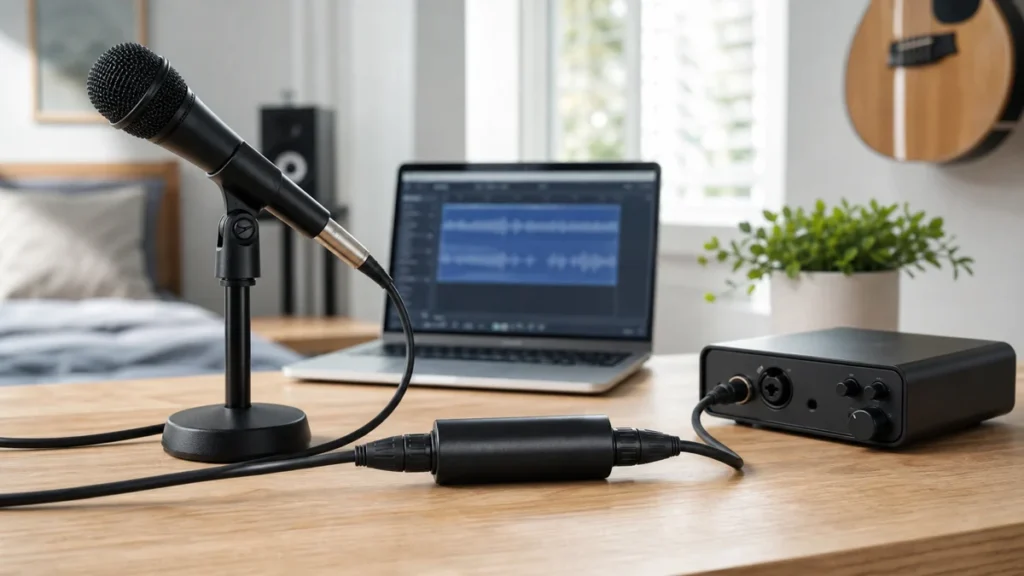
Cloudlifter and FetHead are both inline gain-booster paths for dynamic microphones that need more clean level before an interface preamp. They do not make a bad room quieter, and they are not needed for every microphone.
Choose Cloudlifter if you want a small box in the cable path and do not mind using another short XLR cable. Choose FetHead if you want the booster to stay directly on the mic or inline cable path with less desk clutter.
Evidence boundary: this is an editorial comparison based on official information and beginner workflow analysis. It does not claim measured noise-floor testing, current prices, stock status or brand authorization.
Who This Comparison Is For
This comparison is for beginners using dynamic vocal microphones with an audio interface and wondering why the vocal level feels low. It is most relevant when you record quieter singers, spoken vocals, or close dynamic mics that need more gain than an entry-level interface can provide comfortably.
It is not for condenser microphone buyers. Condenser microphones already require phantom power for their own electronics, while these boosters use phantom power to power the inline booster for compatible dynamic or ribbon microphone paths.
Decision Table
| Question | Cloudlifter path | FetHead path |
|---|---|---|
| Setup style | Small box between two XLR cables | Compact inline adapter near mic or cable |
| Desk clutter | More visible on desk or floor | Usually less visible |
| Best reason to choose it | You want the booster accessible and separated from the mic | You want a compact cable-path solution |
| Beginner risk | Forgetting the extra cable or phantom-power switch | Clearance around the mic mount or cable strain |
When To Buy Either One
Consider either booster only after you have checked mic distance, input gain, cable health and interface settings. If the interface preamp gets noisy before the vocal is loud enough, a booster can be useful. Start with How to Set Input Gain for Home Vocal Recording before assuming the hardware is the bottleneck.
The Cloudlifter Path
Cloudlifter makes sense when you want the booster to sit as a visible box in the chain. That can be easier to troubleshoot because you can see where it is placed, but it also means another object and cable path in a small room.
The FetHead Path
FetHead makes sense when you want a compact inline solution. The practical check is physical fit: make sure the adapter does not interfere with your mic clip, shock mount, boom arm movement or cable angle.
Who Should Skip Both
- You use a USB microphone.
- You use a condenser microphone for vocals.
- Your interface already gives enough clean gain.
- Your recordings sound bad because of echo, fan noise, clipping or poor placement.
FAQ
Do Cloudlifter and FetHead need phantom power?
Yes, inline boosters of this type use phantom power from the interface to power the booster. That does not mean the connected dynamic microphone becomes a condenser microphone.
Will a gain booster improve vocal tone?
Not by itself. It can help reach usable level with less preamp strain, but mic placement, room noise and performance still shape the recording.
Should beginners buy one before a better interface?
Only if the current interface is otherwise useful and the main problem is gain headroom. If the interface is missing inputs, monitoring or driver stability, solve that first.
Where should I go next?
Compare microphone paths in Dynamic Microphone vs USB Microphone for Bedroom Vocals and return to the Home Vocal Recording hub.
How We Test
Editorial comparison based on official manufacturer information checked 2026-07-18 plus MusicalCritic beginner workflow analysis. This page does not claim hands-on testing, measured noise-floor performance, current pricing, stock status or brand authorization.
Review Basis
Official Cloud Microphones and TritonAudio information checked 2026-07-18; source evidence is logged in content-source-verification-2026-07-19-0800-batch-2026-07-18-2001.md.