
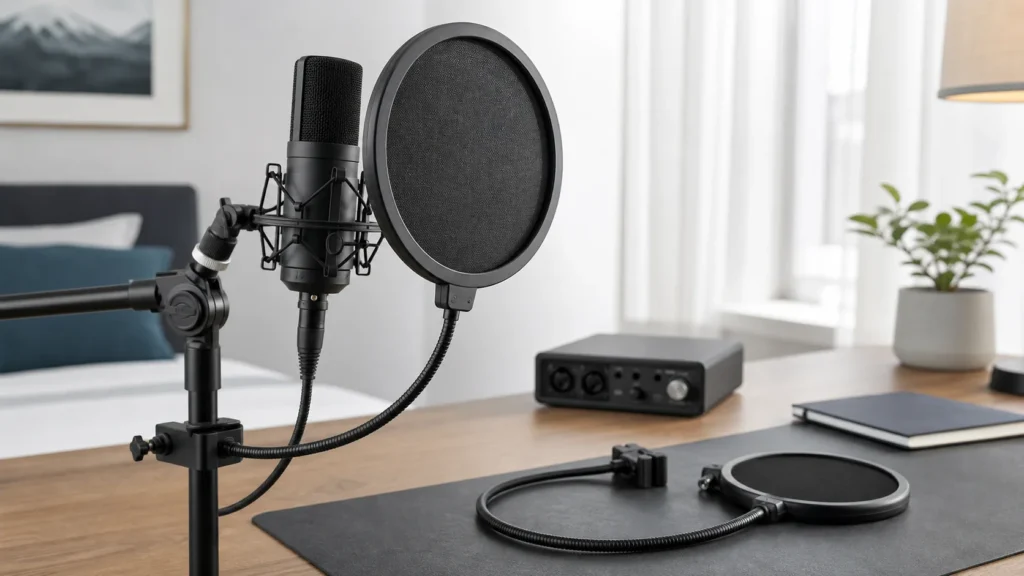
Quick Verdict
Buy a pop filter first if close vocals have plosive thumps. Buy or use a shock mount when stand, desk, floor, or handling vibration reaches the microphone.
They are not substitutes. A pop filter controls air blasts. A shock mount isolates mechanical vibration. Neither one fixes room echo, fan noise, headphone bleed, or bad gain staging.
Evidence boundary: this is an editorial beginner comparison. It does not claim hands-on accessory testing, measured isolation, measured plosive reduction, current pricing, stock status, rankings, or brand authorization.
Side-by-side comparison
| Question | Pop filter | Shock mount |
|---|---|---|
| Main problem solved | Plosive air blasts | Mechanical vibration and bumps |
| Most common beginner use | Close vocal recording | Desk, stand, or floor rumble |
| Compatibility risk | Clamp and stand fit | Exact mic body and thread fit |
| Wrong expectation | It fixes room echo | It fixes plosives |
Which should beginners buy first?
Most home vocal beginners should solve pop control first because close singing often creates obvious plosive problems. That does not mean every singer needs the same filter, but it is usually easier to diagnose than vibration.
A shock mount should move up the list when your silent test captures desk bumps, stand movement, footfalls, or low rumble. Read Do You Need a Shock Mount for Vocals at Home? before treating it as automatic.
Decision rules
- If words like “please” and “baby” create thumps, start with pop control.
- If tapping the desk appears in the recording, test stand isolation and shock mounting.
- If the vocal is echoey, work on room position before either accessory.
- If the backing track leaks into the mic, check headphones first.
- If the mic is too quiet, check gain and distance before buying accessories.
Can you use both?
Yes. A stable home vocal setup can use both a pop filter and a shock mount when both problems exist. The key is not to buy both blindly. Run short tests so each accessory has a job.
For pop filter placement, read How to Record Vocals With a Pop Filter at Home. For condenser-specific pop control, read Does a Condenser Mic Need a Pop Filter for Home Vocals?.
Bottom line
A pop filter and shock mount solve different beginner recording problems. Pick the one that matches the problem you can hear in a short test take.
How We Test
Editorial beginner comparison based on MusicalCritic home-vocal workflow analysis checked 2026-07-19. This page does not claim hands-on accessory testing, measured isolation, measured plosive reduction, current pricing, stock status, rankings, or brand authorization.
Review Basis
MusicalCritic beginner home-vocal workflow analysis checked 2026-07-19; no measured accessory tests or live retailer data used.