
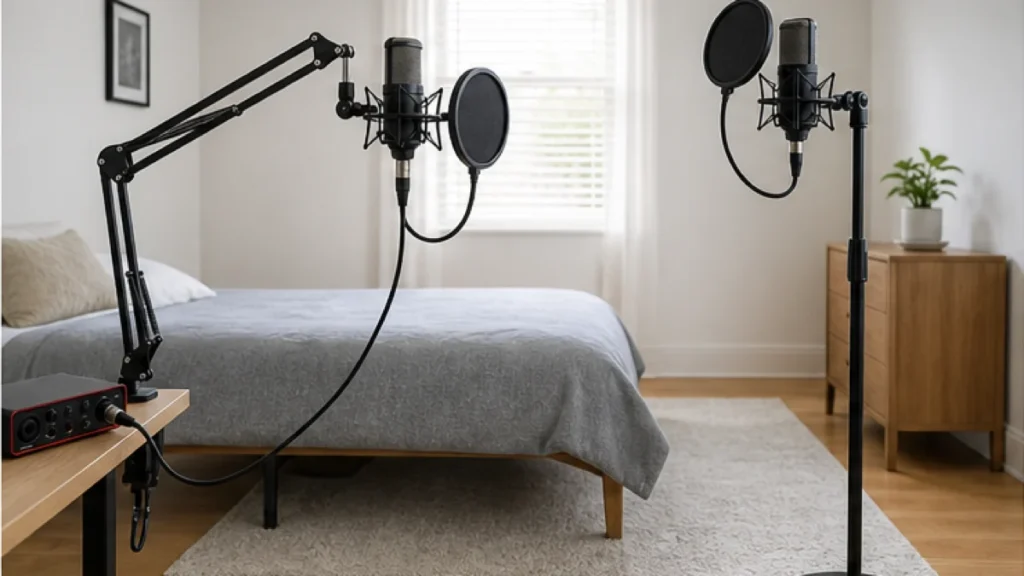
Quick Verdict
Use a boom arm if you record vocals at a desk, need the mic ready quickly, and have a desk that can safely hold a clamp without wobbling. Use a floor stand if you sing standing up, your desk is flimsy, or you want the microphone physically separated from keyboard taps and desk vibration.
For a small bedroom, the better choice is the one that makes correct mic placement easier in your actual room.
Evidence boundary: this is a setup-fit comparison, not a ranked product test. It does not claim hands-on testing, measured load capacity, current prices, stock status or universal product superiority.
Who This Comparison Is For
This comparison is for beginners setting up a vocal mic in a bedroom, apartment or small home-studio corner. It is a workflow decision, not a product ranking.
Decision Table
| Setup question | Boom arm | Floor stand |
|---|---|---|
| Best recording position | Desk-based seated or near-desk vocal takes | Standing takes or recording away from the desk |
| Space use | Keeps the floor clearer but uses desk edge space | Uses floor space but keeps desk uncluttered |
| Vibration risk | Can transmit desk bumps if the desk is active | Better separated from typing and desk movement |
| Placement speed | Fast if the arm stays mounted | Slower to move, but flexible around the room |
| Beginner risk | Bad clamp fit, sag, cable tension | Trip hazard, storage, unstable cheap bases |
When A Boom Arm Makes More Sense
A boom arm is easier if you record beside a laptop or interface and want the mic ready without rebuilding the setup every time. The desk matters. A thin, rounded, glass, unstable or crowded desk can make a boom arm frustrating.
When A Floor Stand Makes More Sense
A floor stand is safer if you sing standing up, need the microphone away from the desk, or do not trust the desk clamp. It also helps when you want to test multiple spots in the room.
Setup Checks Before Buying
Before buying either path, check desk edge thickness, available floor space, mic weight, shock mount size, pop filter position, cable slack and where the singer’s mouth will actually be during a take.
Who Should Skip Both For Now
Skip a new stand purchase if the real problem is room echo, headphone bleed, interface gain or microphone choice. A better stand improves placement, but it does not fix every home-vocal problem.
FAQ
Is a boom arm better than a mic stand for bedroom vocals?
It is better for desk-based recording if the desk is stable and the clamp fits. A floor stand is better when you sing standing up or need the microphone away from desk vibration.
Can a boom arm pick up desk noise?
Yes, it can if the desk is bumped, typed on or moved during recording. A shock mount can help, but avoiding desk movement during takes is often cleaner.
Should beginners buy a cheap boom arm first?
Only if it fits the desk and can hold the microphone without sagging. A cheap arm that cannot hold position is worse than a basic stable floor stand.
Where should I go next?
Use Best Bedroom Vocal Recording Accessories to Fix Echo First and the Home Vocal Recording hub.
How We Test
Editorial setup-fit comparison based on MusicalCritic beginner home-vocal workflow analysis checked 2026-07-19. This page does not claim product ranking, hands-on testing, load-capacity testing, current pricing or stock status.
Review Basis
MusicalCritic beginner home-vocal workflow analysis checked 2026-07-19.