
Quick Verdict
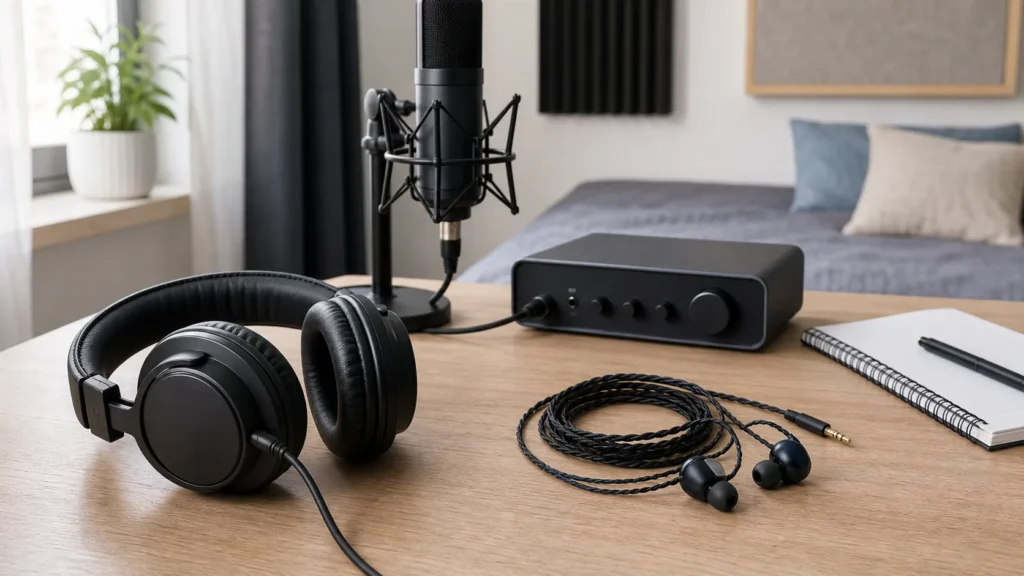
Most beginner home vocalists should start with closed-back headphones before in-ear monitors. Closed-back headphones are simpler to share, easier to put on quickly, less dependent on ear-tip fit and usually more comfortable for short learning sessions.
In-ear monitors can still make sense for singers who already like IEM fit, need a compact monitoring setup, or want strong personal isolation without a large headphone cup. The tradeoff is that fit, cable noise, hygiene and ear fatigue become bigger parts of the recording workflow.
Evidence boundary: this is a product-neutral workflow comparison. It does not claim measured isolation, measured headphone bleed, latency performance, product-specific comfort, current price, stock status or hands-on testing.
Who This Comparison Is For
This comparison is for beginner vocalists recording at home with a USB mic, XLR mic, audio interface or small vocal chain. The goal is not hi-fi listening. The goal is to hear the track clearly while keeping the cue mix out of the microphone.
It is most useful if the singer hears backing-track bleed in the recording, struggles to hear pitch while tracking, or finds normal earbuds too loose or inconsistent.
Decision Table
| Recording question | Closed-back headphones | In-ear monitors |
|---|---|---|
| Beginner simplicity | Easier first choice | More fit-dependent |
| Bleed control | Usually easier than open-back headphones or loose earbuds | Can isolate well when the seal is right |
| Comfort risk | Cup pressure and heat | Ear-tip pressure and fatigue |
| Cable noise | Usually lower risk if cable hangs cleanly | Cable rub can be distracting |
| Sharing and hygiene | Easier to share with basic cleaning | Personal fit and hygiene matter more |
| Session length | Often better for stop-start beginner sessions | Can be tiring if fit is poor |
| Setup mistakes | Cue mix too loud, one ear off | Wrong tip size, cable rubbing, seal breaks |
When Closed-Back Headphones Make More Sense
Closed-back headphones make more sense when the singer is new to recording and wants the least complicated monitoring path. They are easy to put on, easy to remove between takes and less dependent on finding the exact ear-tip fit.
They also make coaching easier. A beginner can quickly change headphone level, adjust one cup briefly, or hand the headphones to another singer without rebuilding the monitoring setup.
The main caution is cue volume. Closed-back does not mean bleed disappears. If the headphone mix is too loud, the microphone can still pick up click, backing track or vocal guide spill. Lowering the cue level and using a better-fitting headphone is usually safer than pushing volume.
When In-Ear Monitors Make More Sense
In-ear monitors make more sense when the singer already likes in-ear fit and wants a smaller, more isolating monitoring setup. They can be useful in a small room where large headphones feel bulky or where the singer wants a consistent personal fit.
The downside is tolerance. Poor tips can break the seal, change the perceived bass, feel uncomfortable or make the singer keep adjusting during takes. Cable rub can also distract the performance or transmit movement noise.
For beginners, IEMs are usually a second-step choice, not the first monitoring purchase, unless the singer already knows they are comfortable with in-ear monitoring.
Common Beginner Mistakes
The most common mistake is turning the cue mix up too loud. More volume can feel helpful in the moment, but it raises bleed risk and can make pitch judgment harder.
Another mistake is recording with one ear uncovered. It can feel natural, but it often causes the singer to push volume or change pitch because the acoustic voice and headphone mix are not balanced.
With IEMs, the common mistakes are choosing the wrong tip size, ignoring cable routing and continuing a take after the seal has slipped.
Setup Checklist
- Lower the cue mix and record a short test phrase.
- Listen for click, track bleed or guide vocal spill during quiet parts.
- Check whether the singer can hear pitch without raising volume.
- Route the cable so it does not rub against clothing or the mic stand.
- Keep both ears covered unless there is a clear reason not to.
- If using IEMs, test tip seal and comfort before a full session.
If the vocal still has bleed after these checks, then the monitoring choice is probably part of the problem.
Who Should Skip Each Option
Skip closed-back headphones if the singer strongly dislikes headphone pressure or already has a stable IEM workflow. Skip IEMs if the singer keeps adjusting tips, hears cable rub, gets ear fatigue quickly or needs to share monitoring with other people.
Skip both upgrades for now if the real issue is room echo, input gain, mic distance or noisy fans. Monitoring helps the singer perform, but it does not treat the room.
Alternatives And Next Steps
If loose earbuds are the current problem, compare this page with closed-back headphones vs earbuds for recording vocals. If gain or monitoring level is unclear, start with input gain before replacing gear.
For a full beginner path, use the Home Vocal Recording hub to connect microphone, headphones, interface and room setup decisions.
FAQ
Are closed-back headphones better than IEMs for beginner home vocals?
Usually, yes. Closed-back headphones are the simpler first choice for most beginners because fit and comfort are easier to manage.
Do in-ear monitors reduce vocal bleed better?
They can when the seal is right, but this page does not claim measured isolation. Fit, tip choice, cue volume and cable routing matter.
Can I record vocals with normal earbuds?
You can, but loose earbuds often leak cue audio and fit inconsistently. That is why closed-back headphones are usually a safer beginner path.
Should I record with one ear off?
Usually not as a default. One-ear monitoring can make pitch and volume decisions less consistent and may increase bleed if the cue mix gets louder.
Do headphones fix latency?
No. Latency depends on the interface, software and monitoring path. Headphones only let the singer hear the cue mix.
How We Test
Product-neutral editorial workflow comparison. MusicalCritic does not claim hands-on testing, measured isolation, measured bleed reduction, measured latency, current pricing, stock status, retailer ranking or brand authorization.
Review Basis
MusicalCritic beginner home-vocal workflow analysis under the 2026-07-19 C4 source boundary; no product-specific facts asserted.