
Decision Scorecard
| Decision Point | Best Fit | What To Check |
|---|---|---|
| Primary use case | Choose around the job you do most often. | Vocals, instruments, practice, monitoring, recording, or live use. |
| Setup complexity | Choose the simpler setup when performance is close. | Cables, software, stands, power, and compatibility. |
| Upgrade path | Choose the option that will stay useful longer. | Whether it still works when your setup grows. |
| Value | Choose the lower total cost, not only lower sticker price. | Accessories and replacement risk matter. |
Pros & Cons
Pros
- Frames the decision around use cases.
- Clarifies who should buy each option.
- Surfaces tradeoffs that spec tables often hide.
Cons
- There may not be one universal fit.
- A third alternative may be better if neither option matches your workflow.
Who It Is For
This comparison is for readers choosing between two close products and needing a clear decision path before buying.
Who Should Avoid It
Avoid forcing this decision if neither product matches your room, instrument, skill level, compatibility needs, or budget.
Alternatives
- Check a category buying guide for a broader shortlist.
- Read individual reviews if one option seems stronger.
- Look at accessories if setup cost is driving the decision.
Final Verdict
Pick the option that solves your main job with the least friction. If neither does, step back to the category guide before buying.
FAQ
How do I choose between two similar products?
Start with your main use case, then compare setup needs, reliability, and total cost.
Should I buy the more expensive option?
Only when the extra cost solves a real problem you will notice in use.
Quick answer: Closed-back headphones are usually better than earbuds for recording vocals because they block more sound, leak less click track into the microphone, and help singers hear themselves more consistently. Earbuds can work for quick demos, but they are not the best first choice for clean beginner vocal takes.
Which should beginners use?
If you are recording vocals at home and can buy one monitoring option, choose closed-back headphones first. They are easier to position, easier to hear over the room, and usually reduce headphone bleed better than typical earbuds. Earbuds are useful when you need portability or already own a quiet pair, but they are more likely to fit inconsistently and leak if the volume is high.
| Choice | Best for | Main risk |
|---|---|---|
| Closed-back headphones | Beginner vocal recording, click tracks, overdubs, consistent monitoring | Can feel bulky or warm during long sessions |
| Earbuds | Quick demos, travel, very small setups, low-volume guide tracks | Fit and isolation vary; bleed can still happen |
| Open-back headphones | Mixing and editing after recording | Too much leakage for most vocal tracking |
Why closed-back headphones are safer
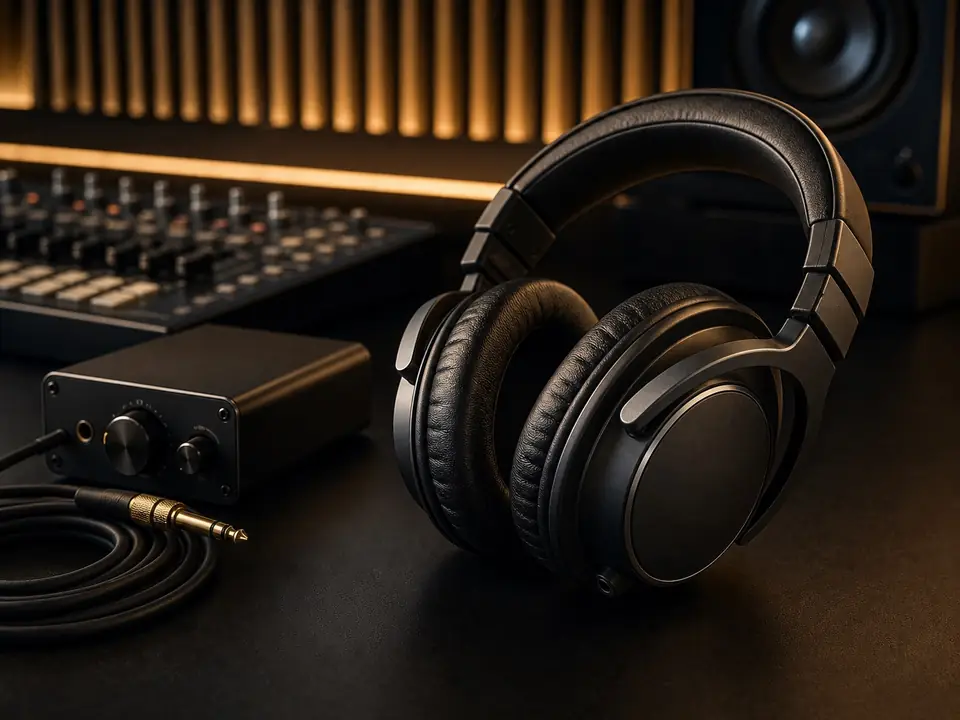
Closed-back headphones keep more of the backing track inside the ear cups. That matters because a vocal microphone can pick up the click, beat or guide vocal if the monitoring is loud. Closed-back headphones also make it easier for beginners to keep monitoring volume lower because the outside room is less distracting.
- Better isolation from the room.
- Less click-track bleed into the vocal mic.
- More consistent fit from take to take.
- Easier to share a repeatable setup with another singer.
When earbuds are acceptable
Earbuds can work if you are recording a rough idea, keeping the backing track quiet, or using a pair that seals well. They are not automatically bad. The problem is that many earbuds do not isolate consistently, and a singer may turn the volume up to hear the track, which increases bleed.
- Use low monitoring volume.
- Keep the cable from rubbing against clothing.
- Record a silent test with the track playing to check bleed.
- Avoid using open-fit earbuds for serious vocal takes.
What about one-ear monitoring?
Some singers pull one ear cup off to hear their natural voice. This can help pitch and comfort, but it also increases bleed. If you do this, lower the headphone volume and turn the open side away from the microphone when possible.
Beginner buying rule
Buy closed-back headphones first if vocals are part of your setup. Use earbuds only as a backup or demo tool unless they seal well and pass a bleed test. Do not buy open-back headphones as your only recording monitor if you need to track vocals.
Best next step
If bleed is already a problem, read how to avoid headphone bleed when recording. If you need a buying path, compare headphones for recording vocals. For the full beginner vocal chain, use the home vocal recording guide and the headphones hub.
FAQ
Can you record vocals with earbuds?
Yes, but keep the volume low and check for bleed. Earbuds are better for quick demos than controlled vocal tracking.
Are closed-back headphones required?
They are not required, but they are the safer beginner choice because they reduce leakage and give more consistent monitoring.
Are open-back headphones good for recording vocals?
Usually no. Open-back headphones are useful for mixing, but they leak too much sound for most vocal recording sessions.
How We Test
Editorial comparison based on common home vocal monitoring and bleed-control needs; no claim of lab measurement.
Review Basis
Editorial research and beginner setup guidance; not a lab product test.