
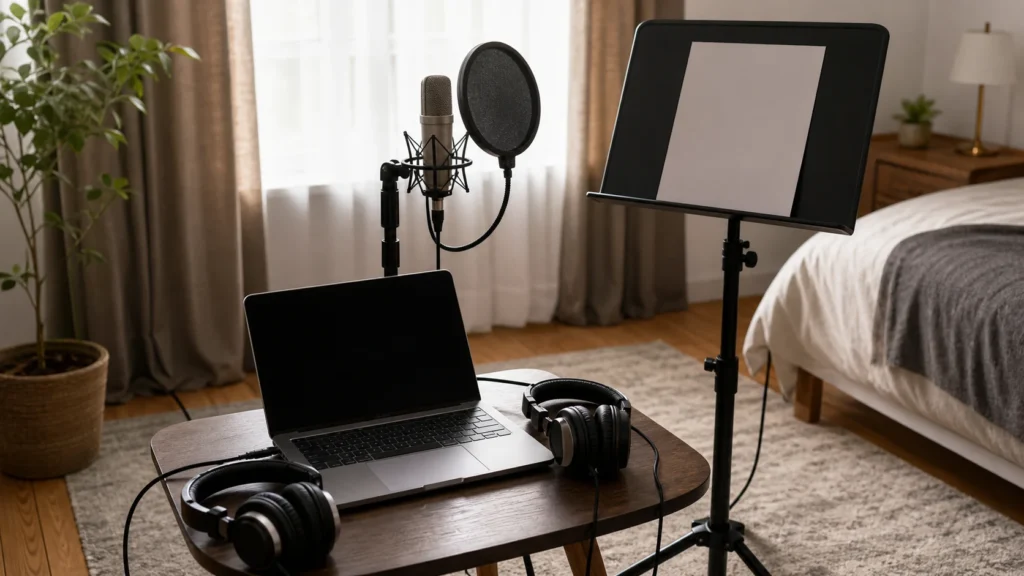
A vocal double is a second performance recorded to support the main vocal. Beginners get better doubles by repeating the same mic setup, matching timing and energy, and recording a real second take instead of copying the lead vocal and calling it a double.
MusicalCritic may earn a commission from qualifying links. Illustrative home recording setup; no exact product model or hands-on test is pictured.
Quick Answer
To record vocal doubles at home, keep the same mic distance and gain as the lead take, lower the lead vocal enough to sing with it, match phrasing closely, record several short passes and label the strongest double separately from the main vocal.
What A Vocal Double Does
A double can make a chorus feel wider, thicker or more confident. It is not just a louder copy of the same file. The small differences between two real performances create the effect. If the timing is too loose, the double can sound messy instead of bigger.
Keep The Setup The Same
Use the same microphone position, gain and room spot you used for the lead vocal unless you intentionally want a different tone. If the double is recorded from a different distance, it may not blend. Label setup changes so you know why the double sounds different.
Beginner Double Workflow
- Choose the lead section you want to support.
- Lower the lead vocal in the headphone mix so you can follow it without shouting.
- Record two or three real double takes for that section.
- Listen for timing and pronunciation before choosing the best one.
- Keep the double lower than the lead at first, then adjust during mixing.
What To Match
| Element | Why it matters | Beginner tip |
|---|---|---|
| Timing | Loose timing sounds messy | Sing with the lead, not ahead of it. |
| Words | Different consonants jump out | Match endings and hard consonants. |
| Energy | Weak doubles disappear | Match the lead’s emotion, not just pitch. |
| Mic distance | Tone changes affect blend | Repeat the same position. |
Do Not Copy And Paste The Lead
Copying the same vocal file to another track usually just makes the lead louder. Delay or pitch effects can create special sounds, but they are not the same as a natural double. Record a real second performance when you want a classic doubled vocal feel.
Common Mistakes
Do not record the double from a different room position unless you want a clear contrast. Do not make the double louder than the lead while choosing takes. Do not ignore word endings. Do not use a tired take just because it was the last one recorded. Do not stack many doubles before the lead vocal itself is solid.
What To Read Next
For take organization, read how to label vocal takes for beginner home recording. For consistency, read how to keep home vocal recording takes consistent. For room setup, start with home vocal recording.
FAQ
Should vocal doubles be perfectly in time?
They should be close enough to support the lead. Tiny differences are normal, but obvious late words can sound messy.
Should I double the whole song?
Usually no. Beginners can start with choruses, hooks or important phrases instead of doubling every line.
Can I use the same mic for doubles?
Yes. Using the same mic and setup often helps the double blend with the lead vocal.