
Short Answer
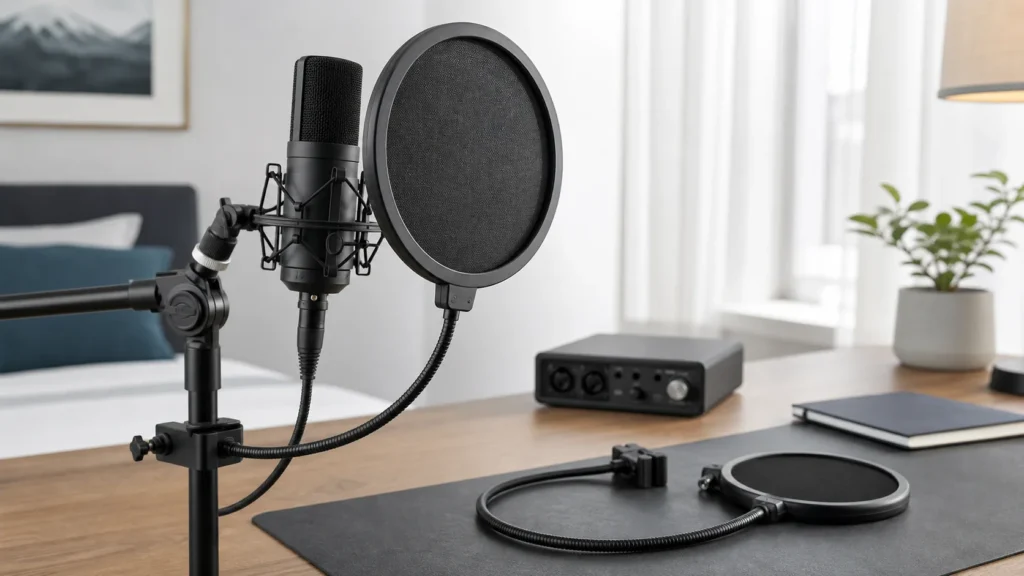
Most beginner condenser mic vocal setups should use a pop filter or another form of pop control when recording close vocals. Condenser microphones can capture detail, but close singing can also send plosive air blasts into the capsule.
A pop filter helps with plosives. It does not fix room echo, fan noise, clipping, headphone bleed, or weak performance level.
Evidence boundary: this is an editorial beginner FAQ. It does not claim hands-on accessory testing, measured plosive reduction, current pricing, stock status, rankings, or brand authorization.
When a pop filter helps
A pop filter helps when words with hard consonants create low thumps or air blasts in the vocal track. This is common when a singer works close to a condenser mic to get a direct vocal in a bedroom or apartment.
If you already hear harsh room echo or fan noise, start with room position and gain before buying another accessory. The Home Vocal Recording hub links the basic setup path.
When you might not need one
- Your microphone has an effective built-in pop solution for your exact distance and singing style.
- You sing off-axis and plosives are not audible in a test recording.
- You are recording spoken scratch tracks where minor plosives do not matter.
- The real problem is room sound, noise, clipping, or headphone bleed.
What to check before buying
| Check | Why it matters | Beginner action |
|---|---|---|
| Stand clamp fit | Some filters sag or will not clamp cleanly | Check stand shape and filter arm style |
| Mic distance | Too far back adds room sound | Keep distance repeatable after adding the filter |
| Screen visibility | The filter can block lyrics or a DAW screen | Place it so the singer can still perform naturally |
| Problem type | Pop filters do not solve every vocal flaw | Record a plosive test and listen before buying |
Pop filter vs technique
A pop filter is not a substitute for consistent mic technique. The best beginner result usually comes from a stable stand, steady singing distance, sensible input gain, and a short test take before recording the final vocal.
For placement, read How to Record Vocals With a Pop Filter at Home. For a buying path, read Best Pop Filters for Home Vocal Recording.
FAQ
Does every condenser microphone need a pop filter?
No. The practical question is whether your vocal test has audible plosives at your real singing distance.
Can I use a foam windscreen instead?
Sometimes, but foam and pop filters solve slightly different beginner problems. Compare the tradeoffs in Pop Filter vs Windscreen for Home Vocal Recording.
Will a pop filter make my room sound better?
No. It helps with air blasts near the mic. Room echo and noise need placement, gain, and room changes.
Bottom line
Use pop control when close condenser-mic vocals have plosive blasts. Do not expect it to solve room, noise, gain, or monitoring problems.
How We Test
Editorial beginner FAQ based on MusicalCritic home-vocal workflow analysis checked 2026-07-19. This page does not claim hands-on pop-filter testing, measured plosive reduction, current pricing, stock status, rankings, or brand authorization.
Review Basis
MusicalCritic beginner home-vocal workflow analysis checked 2026-07-19; no measured accessory tests or live retailer data used.