
Decision Scorecard
| Decision Point | Best Fit | What To Check |
|---|---|---|
| Primary use case | Choose around the job you do most often. | Vocals, instruments, practice, monitoring, recording, or live use. |
| Setup complexity | Choose the simpler setup when performance is close. | Cables, software, stands, power, and compatibility. |
| Upgrade path | Choose the option that will stay useful longer. | Whether it still works when your setup grows. |
| Value | Choose the lower total cost, not only lower sticker price. | Accessories and replacement risk matter. |
Pros & Cons
Pros
- Frames the decision around use cases.
- Clarifies who should buy each option.
- Surfaces tradeoffs that spec tables often hide.
Cons
- There may not be one universal fit.
- A third alternative may be better if neither option matches your workflow.
Who It Is For
This comparison is for readers choosing between two close products and needing a clear decision path before buying.
Who Should Avoid It
Avoid forcing this decision if neither product matches your room, instrument, skill level, compatibility needs, or budget.
Alternatives
- Check a category buying guide for a broader shortlist.
- Read individual reviews if one option seems stronger.
- Look at accessories if setup cost is driving the decision.
Final Verdict
Pick the option that solves your main job with the least friction. If neither does, step back to the category guide before buying.
FAQ
How do I choose between two similar products?
Start with your main use case, then compare setup needs, reliability, and total cost.
Should I buy the more expensive option?
Only when the extra cost solves a real problem you will notice in use.
Vocal Monitoring Comparison
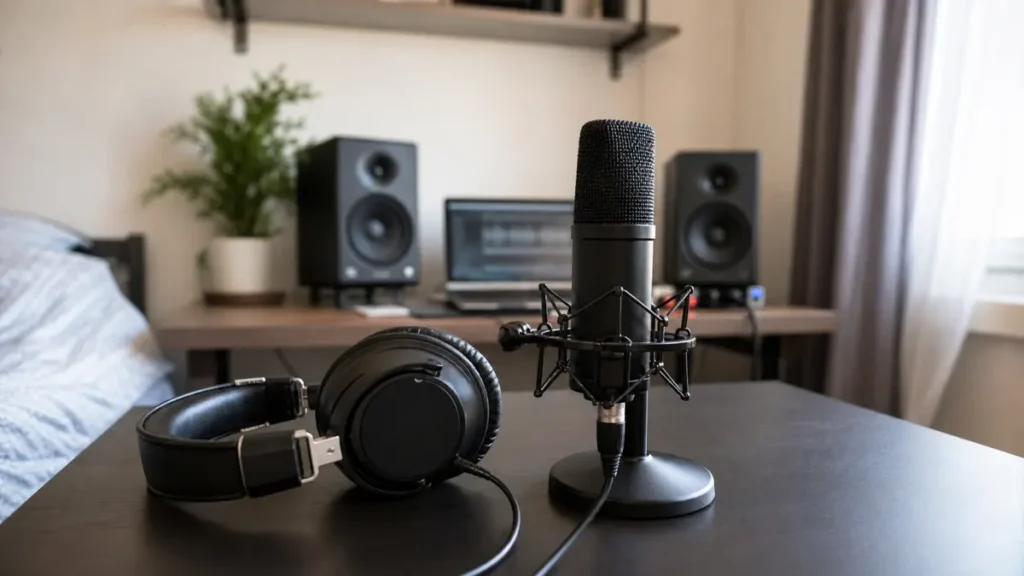
Answer first: For recording vocals, closed-back headphones are usually the first monitoring tool because they keep the backing track closer to your ears and away from the microphone. Studio monitors are better for playback and rough mix checks, but they can leak sound into the vocal mic during tracking.
MusicalCritic may earn a commission from qualifying links. This comparison uses official product categories and editorial workflow guidance, not measured bleed or room-response testing.
Quick Decision Table
| Need | Closed-back headphones | Studio monitors |
|---|---|---|
| Tracking vocals | Usually the safer first choice. | Usually muted while recording. |
| Backing-track bleed | Lower risk when cue volume is controlled. | Higher risk because the mic can hear the speakers. |
| Bedroom room limits | Less dependent on room treatment. | More affected by walls, corners and desk placement. |
| Rough mix checks | Useful, but can hide speaker-translation issues. | Useful after the take is recorded. |
| Late-night work | Usually more practical. | Can disturb other people nearby. |
Choose Closed-Back Headphones If
- You are recording vocals while listening to a guide track.
- Your room is untreated or you record near reflective surfaces.
- You need to work quietly at night.
- You want a simple cue-monitoring setup before buying monitors.
Use Studio Monitors If
- You are checking the take after recording, not while the mic is armed.
- You can keep playback at a controlled volume.
- You want a second perspective on vocal balance and effects.
- You understand that monitors do not fix the room around them.
Beginner Workflow
- Record the vocal with closed-back headphones at the lowest usable cue volume.
- Keep one consistent headphone fit during the take.
- Mute monitors while recording.
- After the take, check the vocal on headphones and monitors if available.
- If the vocal feels too loud or too quiet everywhere, adjust the mix rather than blaming one playback device.
Read Next
- Home Vocal Recording for Beginners
- Best Closed-Back Headphones for Vocal Tracking
- Can You Mix Vocals on Closed-Back Headphones?
FAQ
Can you record vocals with studio monitors on?
You can, but beginners usually should not. The microphone can capture the backing track from the speakers.
Are closed-back headphones enough for a final mix?
They can help with rough decisions, but final balance is stronger when checked on more than one playback system.
Do closed-back headphones remove all bleed?
No. High cue volume and poor fit can still leak into the microphone.