
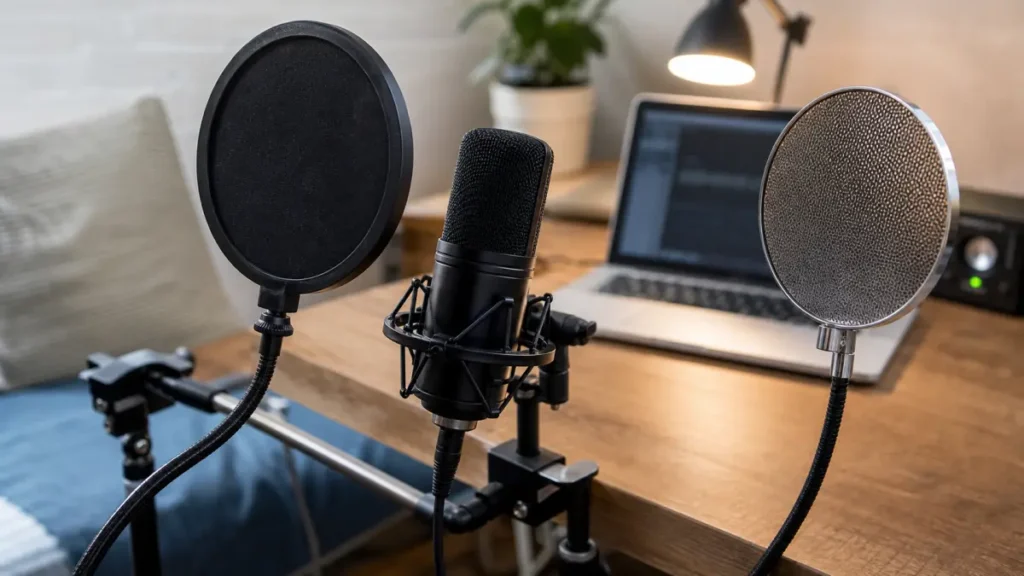
For most beginner vocal setups, a basic clip-on fabric pop filter is the easiest first choice because it is cheap, flexible and simple to position. A metal pop filter can be cleaner-looking and easier to wipe down, but it still needs correct distance and angle. Neither style fixes room noise, mic clipping or harsh vocal tone by itself.
MusicalCritic may earn a commission from qualifying links. This page uses official source boundaries and editorial workflow guidance; it does not track live offers, availability or retailer ratings.
Quick Verdict
- Choose a clip-on fabric pop filter if you are setting up a first USB or XLR vocal mic on a desk arm and want the most forgiving, low-cost option.
- Choose a metal pop filter if you want a slimmer screen that is easier to clean and does not absorb moisture like fabric.
- Do not skip placement: the filter normally works best when it leaves a small gap between your mouth, the filter and the mic grille.
What A Pop Filter Actually Does
A pop filter reduces bursts of air from consonants such as P and B before they hit the mic capsule. Those bursts can create low-frequency thumps that are hard to repair cleanly after recording. A pop filter is not the same thing as a reflection filter, windscreen or room treatment.
Clip-On Fabric Pop Filters
A clip-on fabric pop filter usually uses a flexible gooseneck, a clamp and one or two fabric layers. The biggest advantage is positioning. You can bend the filter in front of a side-address condenser, a USB mic or many dynamic broadcast-style mics without needing a perfect stand setup.
The tradeoff is bulk. Cheap clamps can slip on thin desk arms, the screen can block your view of the mic, and fabric can collect moisture or dust. Beginners should check clamp fit before assuming every filter fits every stand.
Metal Pop Filters
Metal pop filters are often thinner and easier to wipe clean. Many redirect air downward or sideways instead of relying on fabric layers. They can look tidier on camera and may be less likely to sag than a weak gooseneck fabric filter.
The risk is assuming metal means automatic improvement. If the screen sits too close to the mic, or if the singer works too close to the screen, plosives can still get through. Some curved metal filters are designed for specific mic shapes and may not line up well with every beginner setup.
Decision Table
| Need | Better first pick | Why |
|---|---|---|
| Lowest-cost first vocal setup | Clip-on fabric | Usually cheaper and easy to position. |
| Easy cleaning | Metal | Hard surface is easier to wipe after sessions. |
| Awkward desk arm position | Clip-on fabric | Flexible gooseneck gives more placement options. |
| Camera-friendly desk setup | Metal | Often slimmer and less visually bulky. |
Setup Checklist
- Place the filter between your mouth and the mic capsule, not off to the side.
- Leave space between mouth, filter and mic instead of pressing into the screen.
- Record a short phrase with repeated P and B sounds.
- If thumps remain, angle the mic slightly off-axis and increase distance before raising gain.
- Check whether the clamp pulls your boom arm down during a full session.
Who Should Not Overthink This
If you are making demos, guide vocals, podcast vocals or beginner covers at home, a reliable clip-on filter is usually enough. Spend more attention on mic distance, gain staging, headphone monitoring and reducing desk vibration before chasing expensive pop-filter upgrades.
Read Next
- Home Vocal Recording for Beginners
- How to Place a Pop Filter for Vocal Recording
- How to Set Mic Gain for Vocals at Home
FAQ
Does a metal pop filter sound better than fabric?
Not automatically. The result depends on placement, singer distance and the mic. A well-placed basic filter usually beats a poorly placed expensive one.
Can I use a foam windscreen instead?
A foam windscreen can help with breath noise, but it is not always as effective against strong plosives as a properly placed pop filter.
Do pop filters remove background noise?
No. They reduce plosive air blasts. They do not remove fans, traffic, keyboard noise or room reflections.