
Top Picks Comparison
| Pick Type | Best For | What To Check |
|---|---|---|
| Best Overall | Most musicians who want the safest first choice. | Balance of sound, usability, build, and price. |
| Best Budget | Beginners who need dependable gear without overspending. | Core performance before extra features. |
| Best Upgrade | Players and creators ready to improve a specific weak point. | Clear improvement over entry-level options. |
Pros & Cons
Pros
- Keeps the buying decision tied to real use cases.
- Highlights accessories and setup needs before checkout.
- Compares practical tradeoffs instead of only specifications.
Cons
- Final choice still depends on room, instrument, skill level, and budget.
- Availability and pricing can change by retailer.
Who It Is For
This guide is for musicians, producers, students, and home studio creators who want a clear shortlist before comparing product-level reviews.
Who Should Avoid It
Avoid using any guide as a blind recommendation if you have unusual compatibility needs, strict stage requirements, or a very specific studio workflow.
Alternatives
- Read individual reviews when one product looks like the strongest fit.
- Use comparisons when two models solve the same problem in different ways.
- Check the related category hub for setup essentials and beginner advice.
Final Verdict
The best buy is the product that fits the job, works with the rest of your setup, and leaves the fewest costly surprises after purchase.
FAQ
How should beginners use this guide?
Start with the recommended use case, then check whether the required accessories and setup match your budget.
Should I buy the cheapest option first?
Only if it still solves the core job reliably. Cheap gear becomes expensive when it needs to be replaced quickly.
Bedroom Vocal Pop Filter Guide
Answer first: The best pop filter for bedroom vocals is the one that stays stable, fits your stand or boom arm and gives you a repeatable mouth-to-mic distance. Beginners should choose by fit and placement first, not by hype. A pop filter helps with plosives; it does not fix room echo, clipping or poor singing distance.
MusicalCritic may earn a commission from qualifying links. This guide uses official product sources and editorial criteria, not real-time offer tracking or product ranking from lab use.
Quick Picks by Need
| Need | Look for | Why it matters |
|---|---|---|
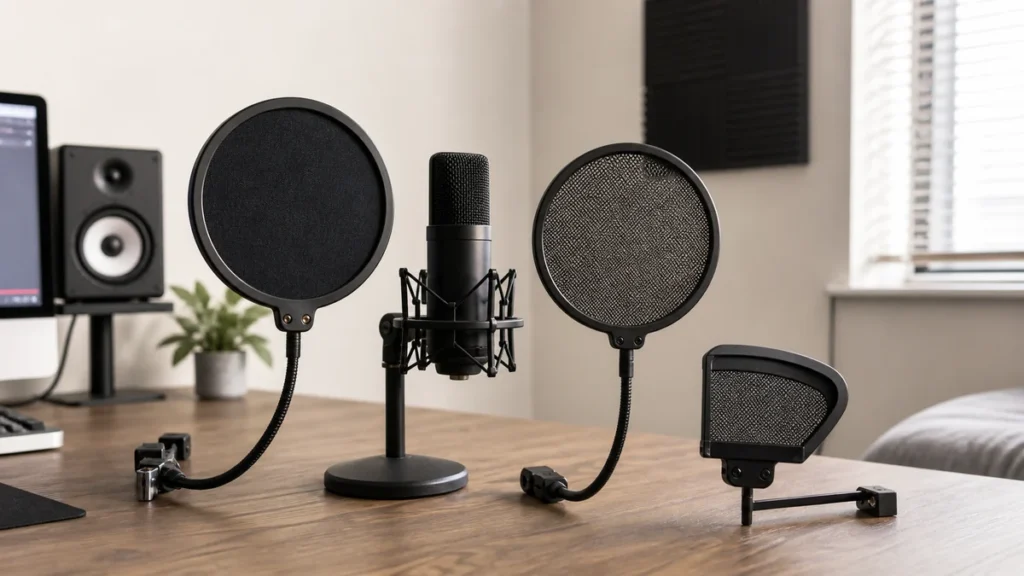
| Beginner bedroom vocal desk | Clamp-on nylon or metal screen with a flexible gooseneck. | It can stay between the singer and mic without changing the whole stand setup. |
| Handheld dynamic mic on a stand | A filter or windscreen that works with the mic shape and stand position. | Large clamp filters can be awkward around handheld-style mics. |
| Tight desk space | Smaller screen diameter and firm neck. | A huge filter can block sightlines and pull on a light stand. |
| Repeatable takes | Stable clamp and visible distance marker. | The filter doubles as a reminder not to drift into the mic. |
Source-Backed Examples to Compare
Shure PS-6 Popper Stopper
Shure lists the PS-6 as a pop filter accessory. Treat it as an official-source example for buyers who want a brand-backed pop-filter option and can confirm it fits their stand and microphone position.
On-Stage ASVS6-GB Pop Blocker with Clamp and Gooseneck
On-Stage identifies the ASVS6-GB as a pop blocker with clamp and gooseneck. It is a useful source-backed example of the common clamp-and-gooseneck style beginners often consider for bedroom vocals.
Buying Criteria
- Clamp fit: Confirm the clamp works with your stand, boom arm or desk arm.
- Gooseneck stability: A filter that drifts is worse than a simpler stable one.
- Screen size: Large screens give more margin but can crowd a small desk.
- Distance control: Place it where it encourages consistent mouth distance.
- Cleaning and storage: Bedroom studios need accessories that can be kept clean and out of the way.
Who Should Skip One
- You mostly record instruments, not close vocals.
- Your microphone already has a built-in approach that controls the problem you hear.
- Your main issue is room echo or background noise, not plosives.
- Your stand is too light to hold another accessory safely.
Read Next
- Home Vocal Recording for Beginners
- Pop Filter vs Windscreen for Vocal Recording
- How to Place a Pop Filter for Vocal Recording
- Do You Need a Pop Filter for Vocals?
FAQ
How far should a pop filter be from the mic?
Leave enough space that air bursts are reduced before they reach the grille, while keeping your mouth distance consistent. Exact spacing depends on the mic, stand and singer.
Is metal better than nylon?
Not automatically. Fit, stability and placement matter more for most beginners than material alone.
Can a pop filter reduce room echo?
No. It helps with plosive bursts, not the room sound around the singer.