
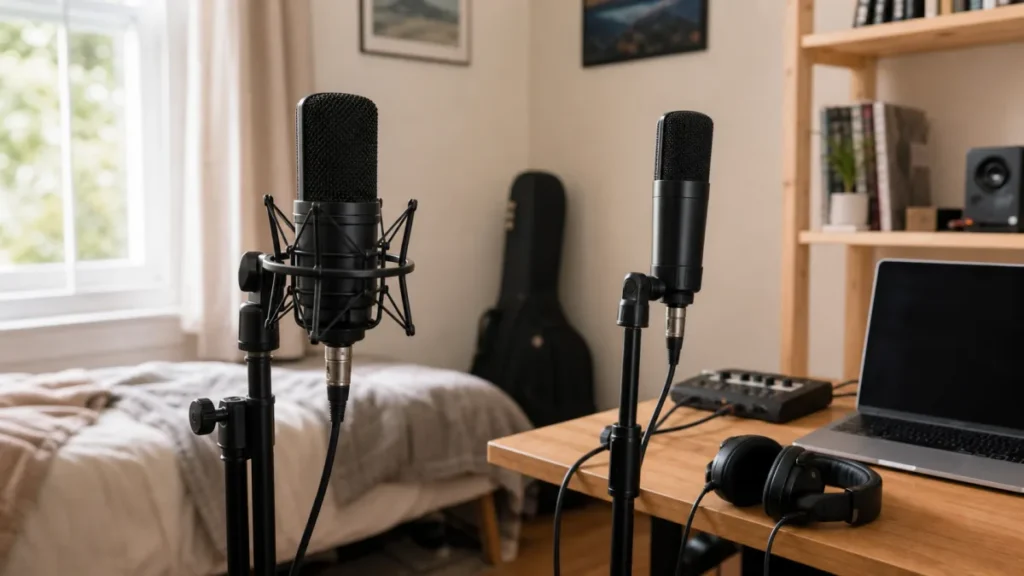
Decision Scorecard
| Decision Point | Best Fit | What To Check |
|---|---|---|
| Primary use case | Choose around the job you do most often. | Vocals, instruments, practice, monitoring, recording, or live use. |
| Setup complexity | Choose the simpler setup when performance is close. | Cables, software, stands, power, and compatibility. |
| Upgrade path | Choose the option that will stay useful longer. | Whether it still works when your setup grows. |
| Value | Choose the lower total cost, not only lower sticker price. | Accessories and replacement risk matter. |
Pros & Cons
Pros
- Frames the decision around use cases.
- Clarifies who should buy each option.
- Surfaces tradeoffs that spec tables often hide.
Cons
- There may not be one universal fit.
- A third alternative may be better if neither option matches your workflow.
Who It Is For
This comparison is for readers choosing between two close products and needing a clear decision path before buying.
Who Should Avoid It
Avoid forcing this decision if neither product matches your room, instrument, skill level, compatibility needs, or budget.
Alternatives
- Check a category buying guide for a broader shortlist.
- Read individual reviews if one option seems stronger.
- Look at accessories if setup cost is driving the decision.
Final Verdict
Pick the option that solves your main job with the least friction. If neither does, step back to the category guide before buying.
FAQ
How do I choose between two similar products?
Start with your main use case, then compare setup needs, reliability, and total cost.
Should I buy the more expensive option?
Only when the extra cost solves a real problem you will notice in use.
Home Vocal Accessory Comparison
Answer first: A shock mount is worth considering when stand bumps, desk vibration or floor movement are getting into your vocal takes. A basic stand clip is enough when the microphone is stable, the stand is not being touched and the room problem is noise or reflections rather than vibration.
MusicalCritic may earn a commission from qualifying links. This comparison uses official accessory sources and editorial setup analysis, not measured vibration testing.
Quick Decision Table
| Need | Shock mount | Stand clip |
|---|---|---|
| Desk or floor bumps | Usually more useful. | Can transmit movement more easily. |
| Handheld dynamic mic on a stand | Often unnecessary. | Often the simple fit. |
| Large condenser mic | Often part of the normal setup. | May not fit or support the mic correctly. |
| Fast setup | More parts to adjust. | Faster and lighter. |
| Light tripod stand | Can make the stand top-heavy. | Usually safer if compatible. |
Choose a Shock Mount If
- You hear low thumps when touching the desk, stand or floor.
- Your microphone is a large condenser designed for a compatible suspension mount.
- You record close vocals and want the stand chain to be more forgiving.
- Your stand can safely hold the extra weight.
Use the Stand Clip If
- The mic is stable and you are not touching the stand during takes.
- You use a handheld-style dynamic mic with a compatible clip.
- You need a compact setup that is easy to move.
- Your real issue is plosives, room reflections or background noise, not stand vibration.
Compatibility Checklist
- Confirm the mount fits your exact microphone body.
- Check thread size or adapter needs before buying.
- Make sure the stand will not tip forward.
- Leave room for the XLR cable and pop filter.
- Record a short bump test before deciding the accessory helped.
Read Next
- Do You Need a Shock Mount for a Microphone?
- How to Place a Pop Filter for Vocal Recording
- Home Vocal Recording for Beginners
FAQ
Does a shock mount make vocals sound better?
Not directly. It can reduce some mechanical vibration, but it does not fix mic tone, room reflections or outside noise.
Can every mic use a shock mount?
No. Fit and thread compatibility matter. A wrong mount can be unstable or block cable access.
Is the included clip bad?
No. If it holds the mic safely and you do not hear handling thumps, the included clip may be enough.