
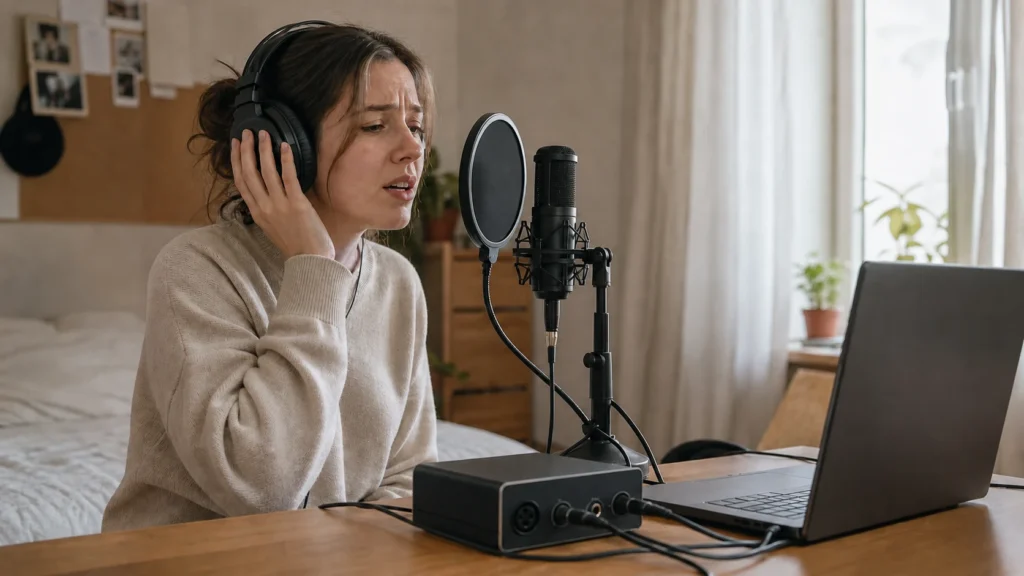
Short answer: Headphone bleed can ruin a vocal take if click, guide vocal or backing track is clearly audible during quiet gaps. But small spill is not always the biggest problem. Clipping, room noise, bad timing or a confusing cue can matter more.
MusicalCritic may earn a commission from qualifying links. This page uses source-bounded editorial guidance and does not track real-time offers, availability or seller review scores.
This FAQ gives a beginner check, not a measured pass/fail threshold for every headphone and microphone setup.
How to Check for Bleed
- Mute the singer and record a few seconds with the headphone cue playing.
- Record a quiet vocal phrase with pauses between lines.
- Listen to the raw file, not a processed mix.
- Check whether click, guide vocal or backing track is obvious in the gaps.
- Lower the cue and repeat the same phrase.
- If needed, switch to better-fitting closed-back headphones.
When Bleed Matters Most
Bleed matters more when the take has quiet gaps, exposed vocal starts, sparse arrangements or a click that does not belong in the final song. It also matters more when you plan to compress the vocal heavily, because quiet spill can become easier to hear later.
When It May Not Be the Main Issue
If the vocal is clipping, boxy, noisy or delayed in the headphones, fix those problems first. A tiny amount of cue spill may be less damaging than a distorted vocal or a performance that feels uncomfortable.
First Fixes
- Lower the backing track or click in the cue.
- Use closed-back headphones with a secure fit.
- Keep both ear cups sealed during the take.
- Move the microphone slightly off the direct headphone spill path.
- Use direct monitoring correctly so the singer does not keep raising volume.
Read Next
- How to Set Headphone Volume When Recording Vocals
- How to Stop Headphone Bleed in Vocal Recordings
- Best Headphones for Recording Vocal and Guitar Demos
- Home Vocal Recording for Beginners
FAQ
Can a microphone pick up closed-back headphones?
Yes. Closed-back headphones help, but they can still leak sound if the cue is loud or the fit is poor.
Is a little headphone bleed acceptable?
Sometimes. If it is hidden by the arrangement and does not affect editing, it may be acceptable for a demo. Obvious click or guide vocal spill is more risky.
Do I need new headphones?
Not always. First lower the cue, check fit and record a short bleed test.
How We Test
Diagnostic workflow guidance. MusicalCritic does not claim measured headphone bleed or universal pass/fail thresholds.
Review Basis
MusicalCritic beginner headphone bleed troubleshooting guidance checked 2026-07-21.