
Home Vocal Setup
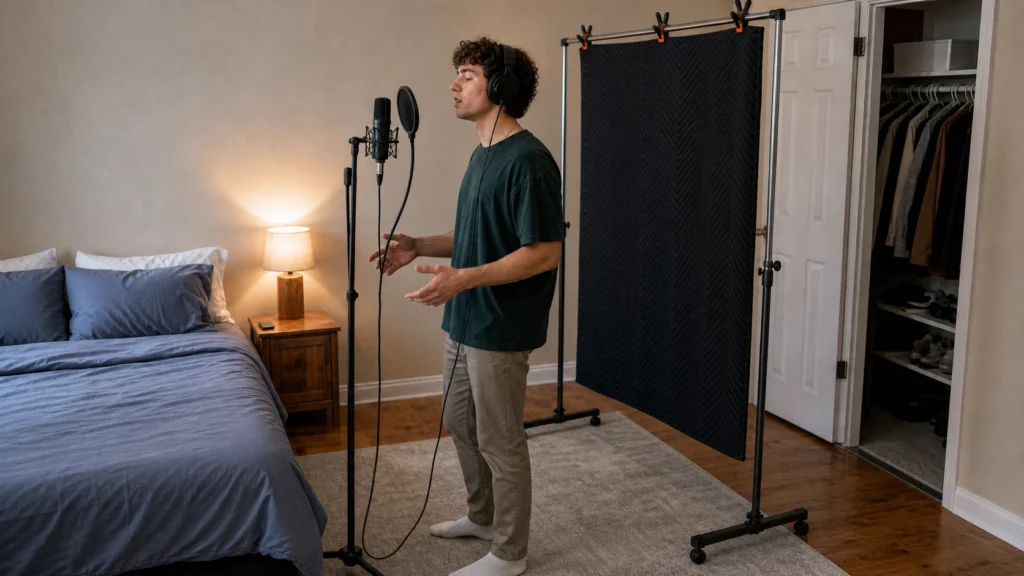
Short answer: To record vocals with a blanket behind you, place a thick blanket behind or partly around the singer, keep the microphone in front of the singer, avoid unsafe hanging, and record a short test take before changing anything else. The blanket is for reflection control, not soundproofing.
This is beginner setup guidance, not construction advice or a measured acoustic treatment plan.
Affiliate note: MusicalCritic may earn a commission from qualifying links. Editorial guidance is based on fit, setup needs, and source-backed research, not real-time price tracking or guaranteed outcomes.
Why the Blanket Goes Behind the Singer
With many vocal mics, the sound bouncing from the wall behind the singer can return toward the microphone. A thick blanket behind the singer can reduce some of that bounce. Putting the blanket behind the microphone can also help in some rooms, but beginners should start with one repeatable setup and compare takes.
Safe Setup Steps
- Use a thick blanket, moving pad or duvet that does not shed noise onto the mic.
- Hang or drape it securely on a stand, rail or door only if it cannot fall.
- Stand a little away from the blanket so your voice does not sound boxed in.
- Keep the microphone on a stable stand in front of you.
- Use closed-back headphones and record a short dry test take.
- Compare the take with and without the blanket before adding more objects.
Common Mistakes
- Hanging the blanket where it can fall into the mic stand.
- Standing so close that the vocal sounds muffled.
- Expecting the blanket to block outside noise.
- Changing the blanket, mic distance and gain all at once, then not knowing what helped.
When This Helps
A blanket setup can help when the vocal sounds splashy, sharp or too roomy in a bare bedroom. It is most useful when combined with good mic distance, quiet headphone monitoring and a stable recording level.
Read Next
- Best Room Fix Accessories for Bedroom Vocal Recording
- Should You Record Vocals in a Closet?
- Dynamic Mic vs Lavalier Mic for Home Vocal Recording
- Home Vocal Recording for Beginners
FAQ
Does a blanket soundproof a room?
No. It can reduce some reflections, but it does not block outside noise like real construction isolation.
Should the blanket be behind me or behind the mic?
Start behind or around the singer and record a comparison. Some rooms may respond differently, so one short test is better than guessing.
Can I use a thin sheet?
A thin sheet usually does very little. A heavier blanket or duvet is more useful, as long as it is mounted safely and quietly.
How We Test
Practical setup workflow; no measured acoustic test or soundproofing claim.
Review Basis
MusicalCritic beginner room workflow checked 2026-07-21 against claim limits.