
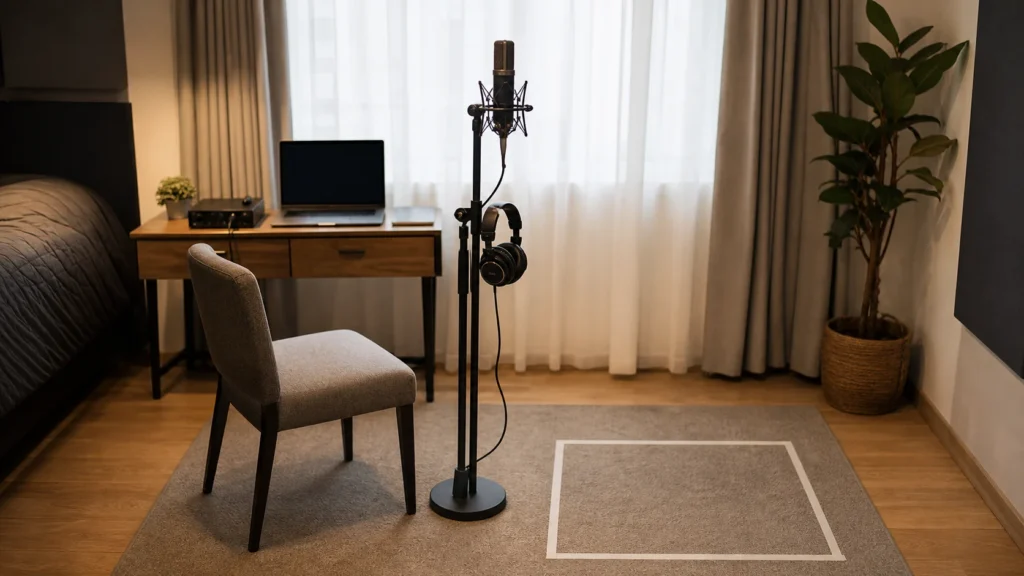
Standing is often easier for energetic singing, but sitting can work for quiet vocals, demos, podcasts and long editing sessions. The best choice is the one that lets you sing comfortably, keep the microphone at a repeatable height and avoid desk or chair noise.
MusicalCritic may earn a commission from qualifying links. Illustrative home recording setup; no exact product model or hands-on test is pictured.
Quick Answer
Record vocals standing if you need more breath support, stronger projection or fewer chair noises. Record sitting if the performance is intimate, spoken, low-energy or easier to repeat at a desk. In either position, keep mic height, distance and headphone level consistent.
When Standing Helps
Standing can help beginners avoid slouching, sing with more consistent energy and keep the microphone away from desk vibrations. It also makes it easier to step back slightly on loud phrases. The tradeoff is that you need a stable floor stand, safe cable routing and enough room to avoid bumping the stand.
When Sitting Works
Sitting can be useful for soft vocals, songwriting demos, voiceover, podcast lines or long sessions where comfort matters. It can also help if you need to control the recording software between takes. The risk is chair movement, desk bumps and posture that changes as you get tired.
Compare The Two Positions
| Factor | Sitting | Standing |
|---|---|---|
| Energy | Good for intimate takes | Better for stronger delivery |
| Desk noise | Higher risk if the mic is desk-mounted | Lower risk with a floor stand |
| Repeatability | Easy if chair position is fixed | Easy with a floor marker |
| Comfort | Better for long sessions | Better for active singing |
| Setup space | Fits small desks | Needs clear floor space |
Set Mic Height For The Position
Do not record seated takes with a mic height meant for standing, or standing takes with a mic stuck at desk height. Put the capsule near mouth height, then adjust the angle slightly to reduce plosives and harsh breath blasts. Keep the pop filter position consistent across takes.
Choose One Position For A Section
If you record one chorus sitting and another standing, the tone and energy may change. That is not always bad, but it should be intentional. For a beginner session, choose one position for the main vocal and label any position change in the take notes.
Common Mistakes
Do not sit in a squeaky chair during quiet vocals. Do not stand with the cable across your feet. Do not sing into a mic that is too low just because the stand is already there. Do not switch position after every take without noting it.
What To Read Next
For repeatable takes, read how to keep home vocal recording takes consistent. For desk vibration, read how to stop desk vibrations in home vocal recording. For setup layout, start with home vocal recording.
FAQ
Is standing always more professional?
No. Many good vocals are recorded seated. The important part is comfort, consistency and avoiding noise.
Should rappers sit or stand?
Many rappers prefer standing for energy and breath control, but seated takes can work for quiet verses or demo writing.
Can I record harmonies sitting after standing for the lead?
You can, but listen for tone changes. If the harmony needs to blend tightly, repeat the lead-vocal position when practical.