
Dynamic Mic Gain FAQ
Short answer: You need a Cloudlifter or similar inline gain booster only when your passive dynamic microphone is too quiet and your interface cannot add enough clean gain without obvious hiss. Many dynamic microphones do not need one in a beginner setup.
MusicalCritic may earn a commission from qualifying links. This FAQ uses official Cloud Microphones CL-1 information for CL-1-specific facts and keeps broader inline-booster advice generic. It is not a pricing feed or universal compatibility guarantee.
What It Does
An inline gain booster sits between a passive microphone and the interface or preamp. Cloud Microphones describes the Cloudlifter CL-1 as providing up to 25 dB of added gain and using standard 48V phantom power. That phantom power runs the booster; it is not the same as sending phantom power through to every microphone type.
When It Helps
- Your passive dynamic microphone has low output.
- The singer records quietly or from farther back.
- Your interface preamp becomes noisy at high gain.
- You need more usable level before the signal reaches the interface.
When It Does Not Help
- It will not fix room noise, reflections, plosives or poor mic distance.
- It will not repair clipping from recording too hot.
- It does not turn a weak recording chain into a full studio chain.
- If your vocal is already loud enough at a clean gain setting, it is not the next purchase.
Beginner Test
- Record a short vocal with the mic close and the singer at normal volume.
- Raise interface gain only until hiss becomes distracting.
- If the vocal is still too low before that point, an inline booster may help.
- If room noise is the real issue, fix placement and room control first.
Source Note
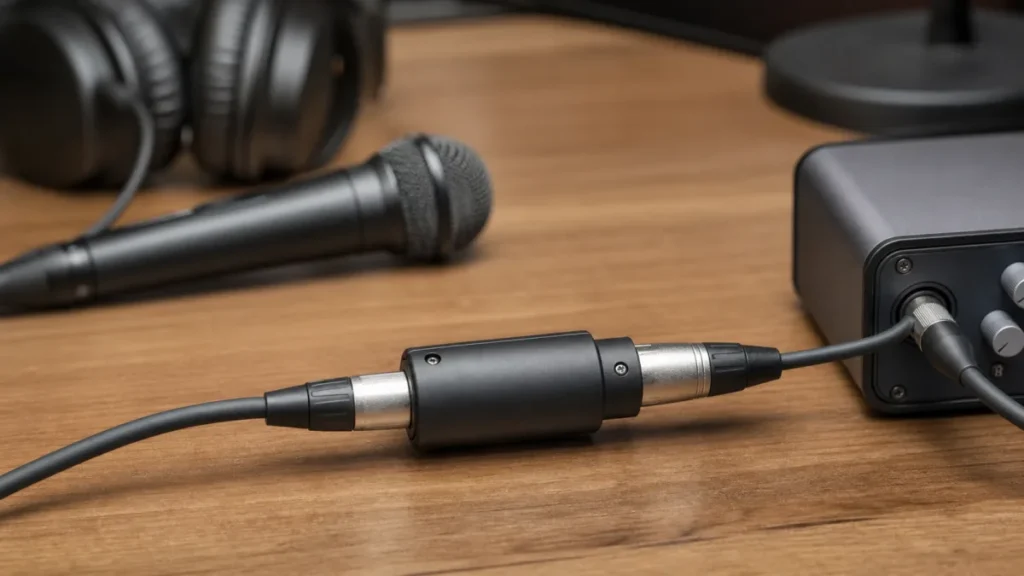
Cloudlifter facts above are limited to the Cloud Microphones CL-1 official product information. Other inline gain boosters may have different gain, power and compatibility behavior. The featured image is a generic inline-booster scene and does not show a Cloudlifter product.
Read Next
- Home Vocal Recording for Beginners
- How to Set Mic Gain for Vocals at Home
- USB Mic vs XLR Interface for Bedroom Vocals
FAQ
Does every dynamic mic need a Cloudlifter?
No. It depends on mic output, performance level, interface gain and noise.
Does a Cloudlifter need phantom power?
The CL-1 uses standard 48V phantom power to operate.
Can it power a condenser mic?
The CL-1 does not pass phantom power through to the microphone, so condenser use requires a different power arrangement and should follow the manufacturer instructions.