
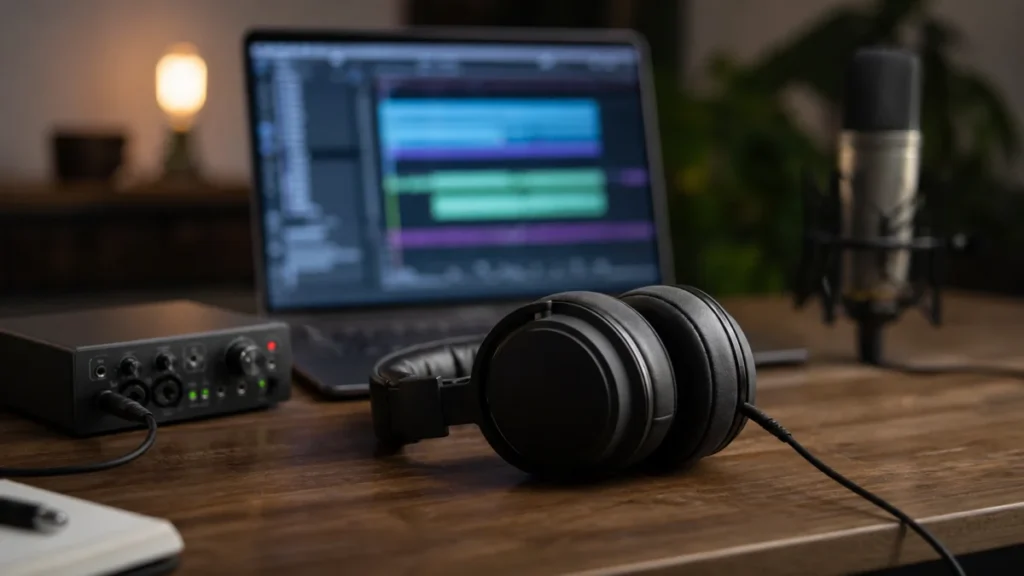
Vocal Mixing FAQ
Answer first: You can use closed-back headphones to make a rough vocal mix, especially when you are recording in the same room. For final balance, check the vocal on speakers, earbuds, a phone or another playback system before trusting the headphone result alone.
MusicalCritic may earn a commission from qualifying links. This FAQ separates tracking and rough mix decisions from final mix translation. It does not claim that any closed-back headphone model is a complete mixing reference.
Where Closed-Back Headphones Help
- Recording vocals without speaker bleed.
- Editing breaths, timing and obvious noises.
- Checking whether the vocal is too loud or too buried.
- Working quietly in an apartment or shared home.
Where They Can Mislead You
- Bass and low-mid balance may feel different than speakers.
- Reverb and delay can seem wider or closer than they really are.
- Very small volume changes may not translate to phones or car speakers.
- Ear fatigue can make harshness harder to judge.
Beginner Workflow
- Record with closed-back headphones to reduce bleed.
- Make a rough vocal level and edit obvious problems.
- Take a short break before judging tone.
- Check the mix on at least one other playback system.
- Adjust only the problems that repeat across systems.
Tracking vs Mixing
Closed-back headphones are usually a stronger first choice for tracking than open-back headphones because they help keep the cue mix away from the microphone. That does not mean they are automatically the best final mixing tool.
Read Next
- Home Vocal Recording for Beginners
- How to Record Vocals With Closed-Back Headphones
- Closed-Back Headphones vs Studio Monitors for Vocal Recording
- Best Closed-Back Headphones for Vocal Tracking
FAQ
Can beginners mix only on closed-back headphones?
They can start there, but they should check the result on at least one other playback system before calling the mix finished.
Are closed-back headphones better than speakers for vocals?
They are often better for recording in the same room. Speakers can be better for judging space and balance when the room supports them.
Do closed-back headphones stop vocal mixing mistakes?
No. They help with isolation, but level, EQ and effects decisions still need playback checks.