
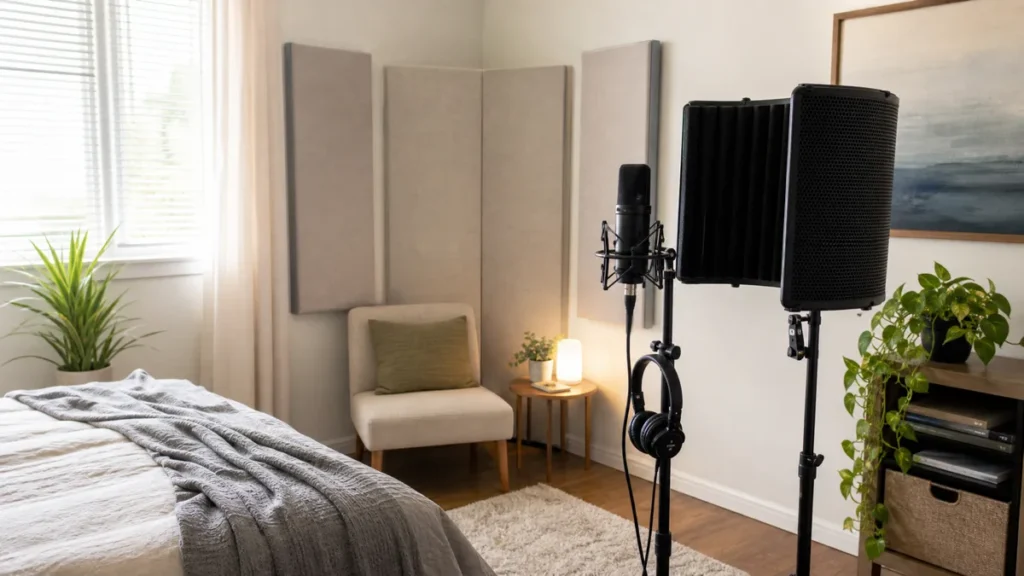
Quick Answer
A treated corner is usually the better long-term beginner path for bedroom vocals because it improves the space around the singer, not just the area behind the microphone. A small portable vocal booth can help with some close reflections, but it can also make placement cramped and does not fix the whole room.
MusicalCritic may earn a commission from qualifying links. Illustrative recording setup images do not show exact product testing unless a page explicitly says otherwise.
Evidence boundary: this is a beginner room-workflow comparison. It does not claim measured absorption, isolation from neighbors, room calibration, live stock checks or retailer ranking.
Decision Table
| Option | Better for | Watch out for | First check |
|---|---|---|---|
| Treated corner | Repeatable vocal position and broader room control | Needs space, placement and some setup effort | Can you record away from hard walls and corners? |
| Portable vocal booth | Small-space users needing a quick close-mic aid | Can sound cramped if used too close or poorly placed | Will it fit the mic, stand and singer comfortably? |
| Blanket or temporary soft setup | Budget testing before buying panels | Unstable or inconvenient for repeat work | Does a short test reduce obvious reflections? |
Why A Treated Corner Often Wins
A treated corner can reduce the hard surfaces around the singer and create a repeatable recording position. It also helps the beginner learn what the room is doing instead of assuming one accessory will solve every reflection.
The best first move is often simple: move away from a bare wall, add soft material behind or beside the singer, and keep the microphone position consistent.
When A Portable Booth Makes Sense
A portable booth or reflection filter can make sense when the room cannot be changed, the mic stand can hold it safely, and the singer still has enough space to perform comfortably.
It is less useful if the room noise comes from fans, traffic, computer hum or neighbors. Those are noise and isolation problems, not just reflection problems.
Beginner Setup Order
- Record a clap and spoken phrase in the current position.
- Move the singer away from hard walls and reflective corners.
- Add soft material near the singer before buying hardware.
- Test microphone distance and angle.
- Only then compare a booth, panels or a more permanent treated spot.
FAQ
Does a portable vocal booth soundproof a room?
No. It may reduce some nearby reflections, but it does not isolate the room from neighbors, traffic or building noise.
Is a treated corner better than a reflection filter?
Often, yes, for repeatable bedroom vocals. A treated corner improves more of the singer’s recording environment.
Can blankets work for testing?
Yes. A temporary blanket setup can help you learn whether softening nearby surfaces improves the recording before buying panels.
How We Test
Editorial room-workflow comparison for beginner bedroom vocals. MusicalCritic does not claim measured absorption, isolation testing, room calibration, live stock, retailer ranking or brand authorization.
Review Basis
MusicalCritic beginner bedroom vocal setup analysis checked 2026-07-20.