
Quick Answer
One mic is usually the safer first setup for recording acoustic guitar and vocals at home. It is simpler, needs fewer inputs, and avoids the most common beginner problems with phase, placement and monitoring.
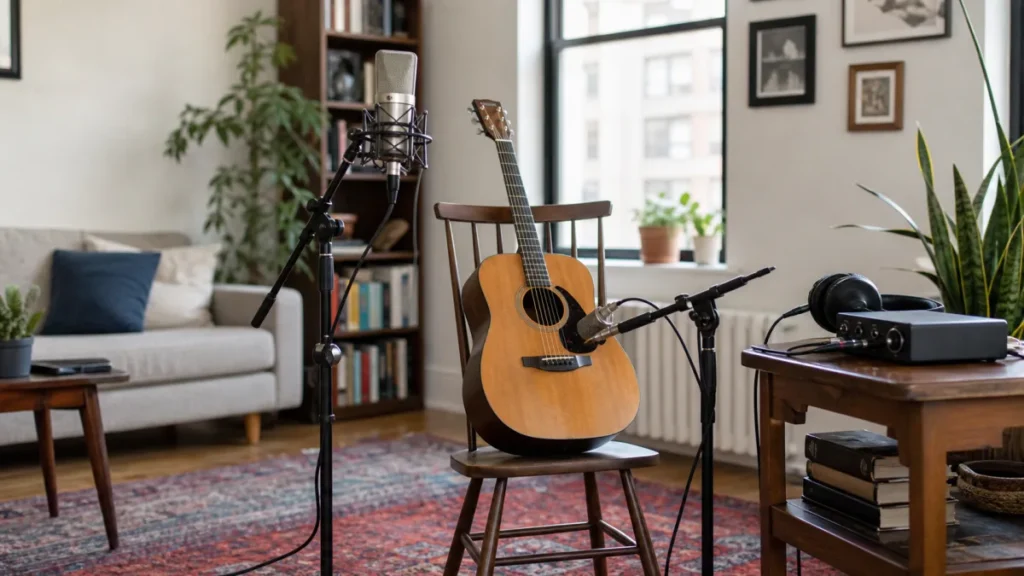
MusicalCritic may earn a commission from qualifying links. Illustrative recording setup images do not show exact product testing unless a page explicitly says otherwise.
Two mics make sense when you want more control over voice and guitar separately, have a two-input interface, can monitor with headphones, and are willing to spend time testing placement. More microphones can improve control, but they also multiply mistakes.
Evidence boundary: this is a workflow comparison for beginner singer-songwriter demos. It does not claim stereo lab trials, phase measurements, exact universal placement distances, professional release quality, live price data or MusicalCritic first-hand lab use.
Decision Table
| Setup | Inputs needed | Main advantage | Main risk | Best user |
|---|---|---|---|---|
| One mic | 1 | Fast setup and fewer technical problems | Less control over vocal/guitar balance after recording | First demos, song sketches, beginners |
| Two mics | 2 | Separate vocal and guitar control | Phase, bleed, input gain and placement complexity | Users who can repeat takes and test placement |
| Record one part at a time | 1 | Cleaner control without buying extra inputs | Less live performance feel | Solo creators who can overdub |
| Phone/portable scratch capture | 0-1 | Fast idea capture | Less controlled sound | Writing notes, not final demos |
When One Mic Is Enough
Use one mic if the goal is a clear song demo rather than a polished production. Place the mic where it hears the performance naturally, use headphones if you are recording to a guide track, and listen back before changing gear.
One mic also keeps the interface choice simpler. If you only own a single-input interface or a USB mic, you can still make a useful demo if the room is quiet and the performance balance is controlled at the source.
When Two Mics Make Sense
Two mics make sense when the vocal needs separate treatment from the guitar, or when the guitar part is too loud or too soft relative to the voice in a one-mic recording.
Before buying a second mic, confirm that your interface can record two inputs at the same time. Also confirm that your headphones do not bleed into the microphones and that you can repeat the performance while adjusting mic positions.
Interface And Input Checklist
If recording voice and guitar at the same time with two mics, choose an interface with two usable microphone inputs and enough gain for both sources. If one mic is a condenser, check phantom power requirements in the microphone manual.
If you only have one input, decide whether the song needs a live one-take feel. If not, recording vocal and guitar separately may be cleaner than forcing a two-source setup through the wrong interface.
Beginner Mistakes
Do not add a second mic before you can get a balanced one-mic take. If the one-mic recording is unusable because the room is loud or the performance balance is inconsistent, two mics may expose the same problems more clearly.
Do not assume two microphones equal stereo or professional sound. Without placement discipline, two mics can create thinness, comb filtering or a vocal/guitar balance that changes every take.
Best For / Not For
One mic best for: first demos, songwriting captures, small apartments, one-input setups and users who want fewer variables.
One mic not for: users who need separate processing, separate edits or tight control over guitar and vocal balance.
Two mics best for: users with a two-input interface, stable mic stands, quiet room control and enough patience to test placement.
Two mics not for: first-day beginners, noisy rooms, weak stands and anyone expecting more gear to replace listening and setup work.
FAQ
Can one mic record vocals and guitar?
Yes. One mic can capture a useful vocal-and-guitar demo if the room is controlled and the singer balances the performance naturally.
Do I need two inputs?
You need two inputs only if you want to record two microphones at the same time. If you record one part at a time, one input can still work.
Why do two mics cause phase problems?
Two mics hear the same sound at slightly different times. If placement is poor, that timing difference can make the recording sound thin or uneven.
How We Test
Editorial workflow comparison for beginner singer-songwriter demos. MusicalCritic does not claim stereo testing, phase measurements, exact universal placement distances, professional release quality, current product pricing or hands-on testing.
Review Basis
MusicalCritic beginner singer-songwriter workflow analysis checked 2026-07-20.