
Quick Answer
A USB mic is the simpler first path for singer-songwriter demos when you only need to record one source at a time into a computer. An XLR mic with an audio interface is usually the better long-term path if your demos may grow into separate vocal and guitar inputs, direct monitoring, better routing and more flexible upgrades.
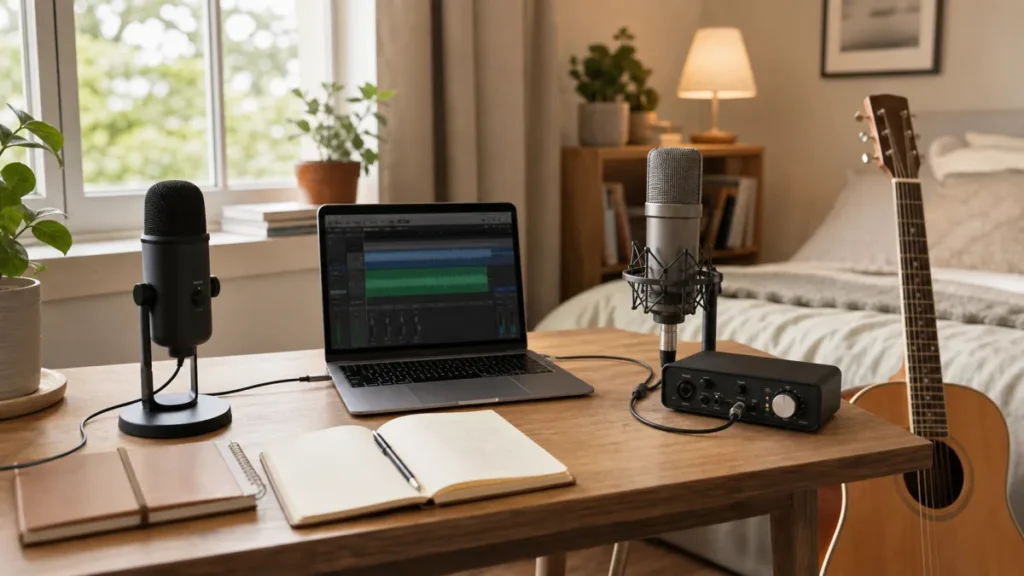
MusicalCritic may earn a commission from qualifying links. Illustrative recording setup images do not show exact product testing unless a page explicitly says otherwise.
Evidence boundary: this is a workflow comparison only. It does not claim measured latency, measured noise floor, live prices, stock, rankings or a universal sound-quality winner.
Best For / Not For
USB mic is best for a beginner who wants one cable, one voice or one acoustic guitar take, and very little setup. It is not the best path if you already know you need two inputs, direct monitoring through an interface or separate upgrades later.
XLR mic plus interface is best for a singer-songwriter who wants to record vocals and guitar more deliberately, monitor while recording and swap microphones or interfaces over time. It is not the simplest path if the main goal is a quick one-cable demo.
Decision Table
| Path | Better for | Watch out for |
|---|---|---|
| USB mic | Fast one-source demos, simple computer setup, fewer cables | Limited upgrade path if vocal and guitar need separate inputs |
| XLR mic plus interface | Flexible vocal/guitar workflow, direct monitoring, separate mic/interface upgrades | More pieces to configure and more gain or monitoring mistakes |
| USB now, XLR later | Testing whether you will keep recording | Buying twice can cost more if interface features are already needed |
One Source Or Two Sources
The biggest question is not whether USB or XLR is magically better. It is whether your demo needs one source at a time or a more flexible recording chain.
If you sing first and overdub guitar later, a USB mic can be enough to learn arrangement, timing and vocal delivery. If you want to capture voice and guitar together, the limits show up sooner. A single USB mic can still record the room performance, but you cannot independently control vocal and guitar levels after recording.
Monitoring And Setup
Singer-songwriter demos fail more often from monitoring and gain mistakes than from choosing the wrong category of microphone. With a USB mic, check that your recording software is listening to the correct device and that headphone monitoring does not create a distracting delay. With an XLR setup, check interface input gain, direct monitoring and headphone level before recording the full take.
Common Mistakes
- Buying an XLR mic without budgeting for an interface and cable.
- Buying a USB mic when the real need is two simultaneous sources.
- Assuming XLR automatically sounds better in every room.
- Changing gear before testing performance distance, room noise and gain.
FAQ
Is USB enough for singer-songwriter demos?
Yes, if the demo is one source at a time and the goal is a clear writing or arrangement reference. It becomes limiting when you need separate control over vocal and guitar or want an interface-based setup.
Do XLR mics sound better than USB mics?
Not automatically. XLR setups are more flexible because the microphone and interface are separate choices. The room, performance distance, gain and monitoring still matter.
Do I need an audio interface?
You need an interface for a standard XLR microphone. You may also want one if you plan to add a second input, monitor directly or upgrade parts of the chain separately.
How We Test
Editorial workflow comparison. MusicalCritic does not claim measured latency, measured noise floor, live stock, retailer ranking or brand authorization.
Review Basis
MusicalCritic singer-songwriter demo workflow analysis checked 2026-07-20.