
Quick Verdict
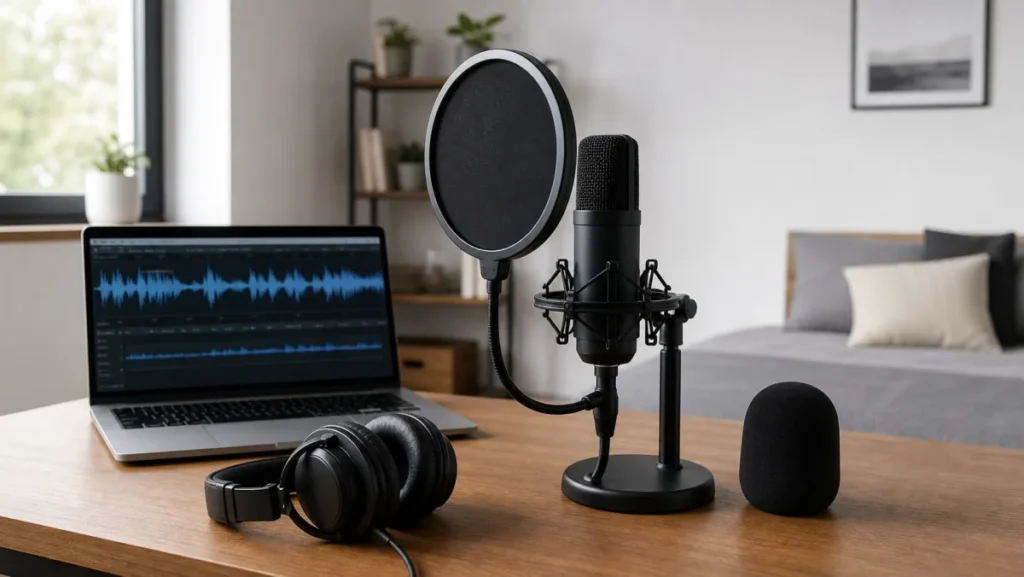
For most indoor home vocal recording, start with a pop filter before a foam windscreen. A pop filter is easier to position between the singer and microphone, helps manage plosive bursts from P and B sounds, and does not need to touch the microphone grille.
A windscreen can still be useful for close mic use, breath movement, handheld-style microphones or setups where the microphone is designed to wear a foam cover. For a beginner singing into a mic on a stand or boom arm indoors, the pop filter is usually the cleaner first purchase.
Evidence boundary: this is an indoor setup comparison, not a product ranking. It does not claim measured plosive reduction, measured tone changes, current pricing, stock status, hands-on testing or universal product superiority.
Who This Comparison Is For
This comparison is for beginner vocalists, songwriters and home-studio creators recording in a bedroom, apartment or small room. It is most useful if the vocal has sharp bursts on P and B sounds, breath hits, or inconsistent distance from the microphone.
It is not a wind, stage or outdoor recording guide. It also is not a ranking of specific pop filters or windscreens. The decision is about what problem the accessory is solving in an indoor vocal chain.
Decision Table
| Setup question | Pop filter | Windscreen |
|---|---|---|
| Main beginner use | Plosive control in front of a stand-mounted vocal mic | Breath or close-mic air control when foam fits the mic |
| Position | Sits between singer and mic | Fits over the mic grille or capsule area |
| Distance control | Helps remind the singer not to crowd the mic | Does less to show singer distance |
| Fit risk | Clamp and neck must work with stand or boom arm | Foam must fit the microphone shape |
| Tone risk | Usually easy to move away from the mic | Can change sound if dense or poorly matched |
When A Pop Filter Makes More Sense
A pop filter makes more sense when the microphone is on a stand or boom arm and the singer can keep a repeatable position. It creates a physical reminder not to sing directly into the grille and gives the plosive burst space to disperse before it reaches the microphone.
It is also easier to adjust. If the vocal sounds dull, roomy or awkward, you can move the filter, angle the microphone, change singer distance, or shift the stand without changing the microphone itself.
When A Windscreen Makes More Sense
A windscreen makes more sense when the microphone is used very close, handheld, near breath movement, or in a setup where a foam cover is part of the mic’s normal use. It can also be simpler when a pop filter arm has nowhere stable to clamp.
The risk is fit and sound. Foam that is not intended for the mic may sit poorly, look unstable, or change the way the vocal feels. This draft does not claim any specific windscreen model is better without a separate product source.
Should You Use Both?
Sometimes, but beginners should not start there automatically. If a pop filter at the right position solves the plosives, adding foam can be unnecessary. If close breath noise remains a problem, foam may help, but first check mic angle, singer distance and gain.
Setup Checklist Before Buying
- Record a phrase with repeated P and B sounds.
- Keep the singer at a repeatable distance from the microphone.
- Angle the mic slightly off the direct air blast.
- Lower the gain if loud plosives are clipping.
- Check whether the stand or boom arm can hold a pop filter clamp.
- Check whether any foam windscreen actually fits the microphone.
If the vocal problem is room echo, fan noise or headphone bleed, a pop filter or windscreen is not the main fix.
Who Should Skip Both For Now
Skip both if the current recording problem is not plosives or breath hits. If the vocal sounds boxy, distant, echoey or noisy, fix room position, mic distance, gain and monitoring first.
Also skip a new accessory if the microphone already includes a working pop filter or foam cover and the real issue is technique. Beginners often benefit more from a short placement test than from another small accessory.
FAQ
Is a pop filter better than a windscreen for home vocals?
Usually, yes. For indoor stand-mounted vocal recording, a pop filter is normally the first tool to try for plosives.
Can a windscreen replace a pop filter?
Sometimes, but not always. A windscreen can help with breath movement and close mic use, while a pop filter is easier to position between the singer and microphone.
Should I use both a pop filter and a windscreen?
Only if the problem remains after correct distance, mic angle and pop-filter placement. Do not add both automatically.
Does a pop filter fix room echo?
No. A pop filter helps with air bursts near the mic. Room echo needs placement changes, soft furnishings, treatment or a different recording position.
How far should the pop filter be from the mic?
Use comfortable spacing that lets the singer stay consistent without touching the mic. The exact distance depends on the mic, singer and stand, so test short phrases before recording.
How We Test
Editorial setup comparison using source-limited accessory facts and MusicalCritic beginner workflow analysis. MusicalCritic does not claim hands-on testing, measured dB reduction, measured plosive reduction, tonal measurements, current pricing, stock status or universal product superiority.
Review Basis
Source-limited Shure and Stedman accessory information checked 2026-07-19, plus MusicalCritic indoor home-vocal workflow analysis.