
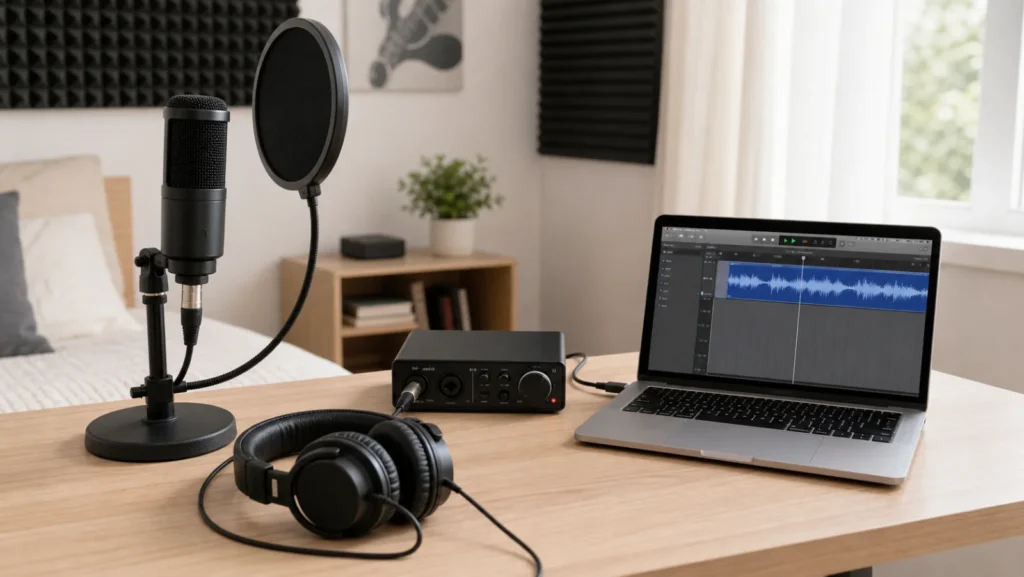
Quick Verdict
If your bedroom sounds echoey or noisy, choose a dynamic vocal microphone first, or choose a hybrid USB/XLR dynamic mic if you want the simplest starting path. Dynamic mics are less likely to exaggerate room reflections when you sing close to the grille, which makes them more forgiving in an untreated room.
A USB microphone can still be the right first buy if you want one cable, no audio interface, and fast recording into a laptop. The catch is that many beginner USB mics are condenser-style designs, so they can make an untreated bedroom sound more boxy, roomy, or harsh if your placement is poor.
Review basis: MusicalCritic editorial setup logic checked 2026-07-18. This page does not claim hands-on microphone testing, measured room rejection, live pricing, stock status, rankings, or brand authorization.
Who this page is for
This guide is for beginner singers, songwriters, and creators recording vocals in a bedroom, apartment, or shared room. It assumes you do not have proper acoustic treatment, a dedicated vocal booth, or a large interface setup yet.
It is not written for engineers choosing studio microphones for a treated room. In a controlled room, a condenser mic can be excellent. In a small untreated bedroom, the mic that flatters a voice on paper can also reveal every wall reflection, fan, keyboard click, and hallway sound.
Short answer
For a first bedroom vocal setup, start with a dynamic mic if room sound is the problem. Start with a USB mic if setup simplicity is the problem. Choose a hybrid USB/XLR dynamic mic if you want both a simple first setup and a realistic upgrade path later.
Decision table
| Setup path | Best for | Main advantage | Main tradeoff |
|---|---|---|---|
| USB-only microphone | Fast laptop recording, demos, calls, simple songwriting | One cable, no interface, easiest start | Often less upgradeable; may pick up more room sound depending on design |
| Dynamic XLR microphone + interface | Bedroom vocals, upgrade path, one-person recording setup | More forgiving close vocal sound and better long-term system | Requires interface, XLR cable, gain setup, and monitoring checks |
| Hybrid USB/XLR dynamic mic | Beginners who want simple now and upgrade later | Can start over USB and move to an interface later | Usually not as flexible as a full XLR chain once you upgrade |
Why bedroom vocals change the decision
In a treated room, microphone choice is often about tone, detail, and style. In a bedroom, the first problem is usually control. The room is close, reflective, and full of noise sources: bare walls, windows, desk surfaces, fans, air conditioning, laptops, and furniture gaps.
A sensitive mic placed far from the mouth hears more of that room. A close-used dynamic mic asks you to sing nearer to the capsule, which increases the voice-to-room ratio. That does not make the room disappear, but it often makes the recording easier to clean up and easier to place in a mix.
USB mics are not bad. The problem is buying a USB mic because it looks simple, then expecting it to solve room echo. A USB connection changes how the mic connects to the computer. It does not automatically make the bedroom sound dry.
Choose a dynamic mic if room control matters most
A dynamic microphone is usually the better first choice when you hear obvious echo, harsh room tone, traffic noise, or computer noise in your recordings. It works best when you sing close, use a pop filter or foam windscreen, keep the rear of the mic pointed toward the worst noise source, and soften the area around the singer.
This path is strongest for loud or medium-loud singers, rap or pop demos, bare-wall bedrooms, and buyers who want a setup they can upgrade piece by piece. The tradeoff is that dynamic mics often need more gain than many condensers, so your interface and gain setup still matter.
Choose a USB mic if simplicity matters most
A USB mic is the cleaner first move when you want the fewest parts and the least setup friction. You plug it into the computer, select it in your recording software, and start. That matters if you are writing songs, practicing vocal takes, recording rough demos, or making content where speed matters more than building a modular studio.
The risk is that a USB mic can trap you in a fixed chain. If you later want a different mic, better monitoring, lower latency, or cleaner gain staging, you may end up replacing the whole setup instead of upgrading one part.
Choose a hybrid USB/XLR dynamic mic if you are unsure
A hybrid USB/XLR dynamic mic sits between both paths. It lets a beginner start over USB, then move to an interface later without buying a completely new microphone. This can be the safest first step for untreated bedroom vocals because it combines close dynamic-mic technique with beginner-friendly connection options.
The tradeoff is that hybrid mics are still compromises. Once you build a full interface-based setup, you may eventually want a dedicated XLR vocal mic that better fits your voice. The hybrid choice is about reducing first-purchase risk, not buying the last microphone you will ever need.
What not to decide by
Do not decide only by connector type. A USB mic can sound good or bad. An XLR mic can sound good or bad. A dynamic mic can still sound muddy if you sing too close without controlling plosives. A condenser can still work in a bedroom if the room is quiet, the singer is controlled, and the mic is placed carefully.
Also avoid deciding by internet popularity alone. A popular mic may be popular because it is durable, inexpensive, easy to buy, or useful for live sound. That does not automatically make it the best first choice for your voice, room, and recording workflow.
Beginner buying checklist
- Is your room echoey when you clap or sing loudly?
- Will you sing close to the mic, or do you naturally pull back?
- Do you already own an audio interface?
- Do you need direct headphone monitoring?
- Are fan, laptop, or street sounds audible in the room?
- Do you want to upgrade one part at a time later?
- Do you need the setup to work quickly with a laptop today?
If most of your problems are room and noise problems, lean dynamic. If most of your problems are setup and confidence problems, lean USB. If both are true, consider a hybrid USB/XLR dynamic mic.
Practical setup tips for either choice
Place the microphone so the back or least sensitive side faces the loudest noise source. Keep the mic away from bare desk reflections. Use closed-back headphones while recording. Keep the singer close enough that the voice is stronger than the room, but not so close that plosives and low-end buildup take over.
If you buy an XLR dynamic mic, budget for the interface, XLR cable, stand, and pop control. If you buy a USB mic, still budget for a stand or boom arm. A USB mic sitting flat on a desk often hears keyboard noise, desk vibration, and room reflections before it hears a controlled vocal.
Best next step
If you are still deciding, start with the home vocal recording hub, the bedroom vocal microphone guide, the USB or XLR beginner FAQ, and the room-control accessories guide.
The safest beginner path is the one that solves your real bottleneck. In an untreated bedroom, that bottleneck is usually not the connector. It is getting a dry, controlled vocal before buying more gear than you can use well.
FAQ
Is a dynamic mic always better than a USB mic for bedroom vocals?
No. A dynamic mic is often more forgiving in an untreated bedroom, but a good USB mic can be the better first tool if you need a simple laptop setup and your room is already quiet enough.
Does USB mean lower quality?
No. USB describes the connection and built-in conversion path. It does not automatically mean poor sound. The limitation is usually upgrade flexibility and room pickup, not the USB connector itself.
Do I need an audio interface for a dynamic microphone?
You need an audio interface for a normal XLR dynamic microphone. You do not need one for a hybrid USB/XLR dynamic mic when using its USB connection.
Can a USB condenser work in a bedroom?
Yes, but placement and room control matter. If the room is reflective, a sensitive condenser may capture more room tone than a close-used dynamic mic.
What should a beginner avoid buying first?
Avoid buying a mic plus accessories without a stand, headphones, or room-control plan. Also avoid spending the whole budget on a sensitive mic if the bedroom itself is the main problem.