
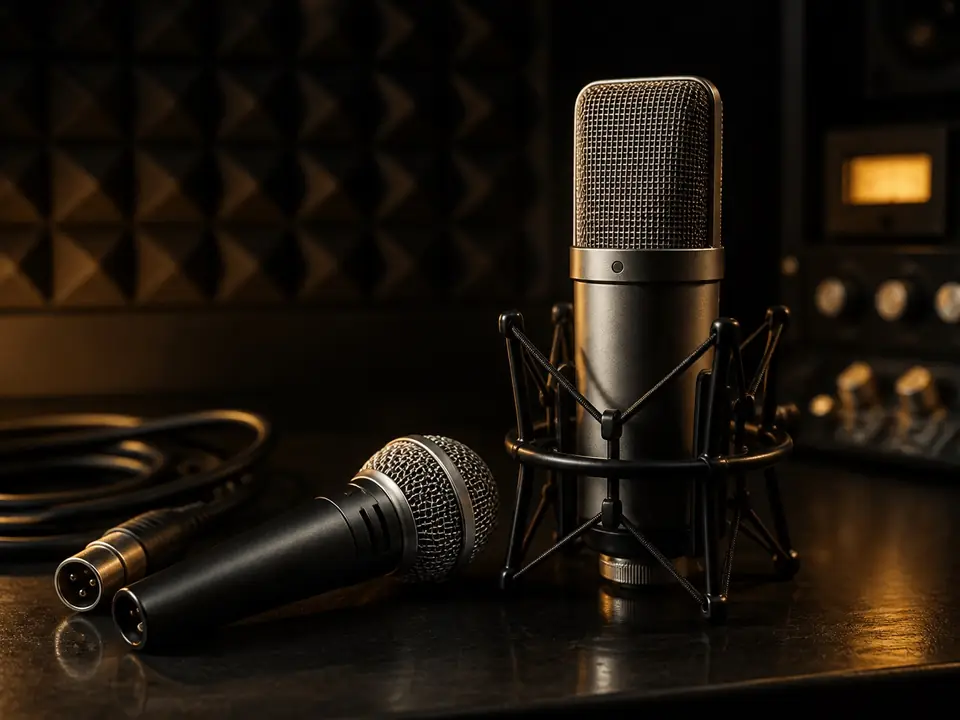
This FAQ helps beginner home vocal recorders decide whether a pop filter is still useful when they use a dynamic microphone such as an SM58-style vocal mic. It focuses on plosives, distance, mic angle, and what a pop filter can and cannot fix.
Short Answer
Yes, many beginners should still use a pop filter with a dynamic microphone when recording vocals close to the mic. A dynamic mic can be more forgiving than some condensers, but it does not make P, B, and breath bursts disappear. Start with a pop filter if you record within about 4-8 inches, sing directly toward the capsule, or notice low-end thumps on words like “pop,” “baby,” or “people.”
Best For
This advice fits beginner singers, podcasters, voice creators, and home studio users recording close vocals in bedrooms, apartments, or untreated rooms.
Not For
A pop filter will not fix clipping, room echo, background noise, poor gain staging, a noisy cable, or a harsh room. If those are the real problems, solve distance, gain, room position, or monitoring before buying another accessory.
When a Pop Filter Helps Most
| Situation | Why it helps | What to check |
|---|---|---|
| Close vocal recording | Reduces air blasts before they hit the mic grille | Keep the filter a few inches from the microphone |
| Strong P and B sounds | Controls plosive bursts that can create low-end thumps | Try a short test phrase before and after adding the filter |
| Beginner singers moving around | Creates a visual distance guide | Use it with stable mic stand height and gain |
| Podcast or spoken voice | Helps keep speech consistent when the mouth is close to the mic | Do not push the filter directly against the grille |
When Technique May Be Enough
If you sing 8-12 inches away, angle the mic slightly off-axis, and do not hear plosive thumps in test recordings, you may not need to buy a pop filter immediately. For some dynamic microphones, a foam windscreen plus better mouth angle can be enough for casual spoken voice, but vocal recording usually benefits from a real pop filter.
What to Try Before Buying
- Record one phrase directly into the mic at 6 inches.
- Record the same phrase slightly off-axis.
- Say a sentence with repeated P and B sounds.
- Listen for low-end thumps, not just overall loudness.
- If the thumps remain, add a pop filter before replacing the microphone.
Alternatives / Next Steps
- What is a pop filter used for?
- How to place a microphone for better vocals
- Do you need a shock mount for vocals?
- Beginner vocal recording setup checklist
- Home vocal recording for beginners
FAQ
Does an SM58-style dynamic mic need a pop filter?
It often benefits from one when used close for vocals. The grille helps, but close vocal plosives can still overload the mic with air blasts.
Is a foam windscreen the same as a pop filter?
No. A foam windscreen can help with breath and light air movement, but a pop filter is usually better for close vocal plosives because it creates a separate barrier before the mic grille.
Can a pop filter make vocals sound professional?
Not by itself. It can reduce plosives and help distance consistency, but vocal quality still depends on mic placement, gain, room reflections, performance, and monitoring.
Review basis: This page is based on common vocal-recording workflow principles, public manufacturer education about plosive control, and MusicalCritic editorial judgment. It does not claim hands-on testing, real-time pricing, stock status, ratings, fixed rankings, or brand authorization.