
Short Answer
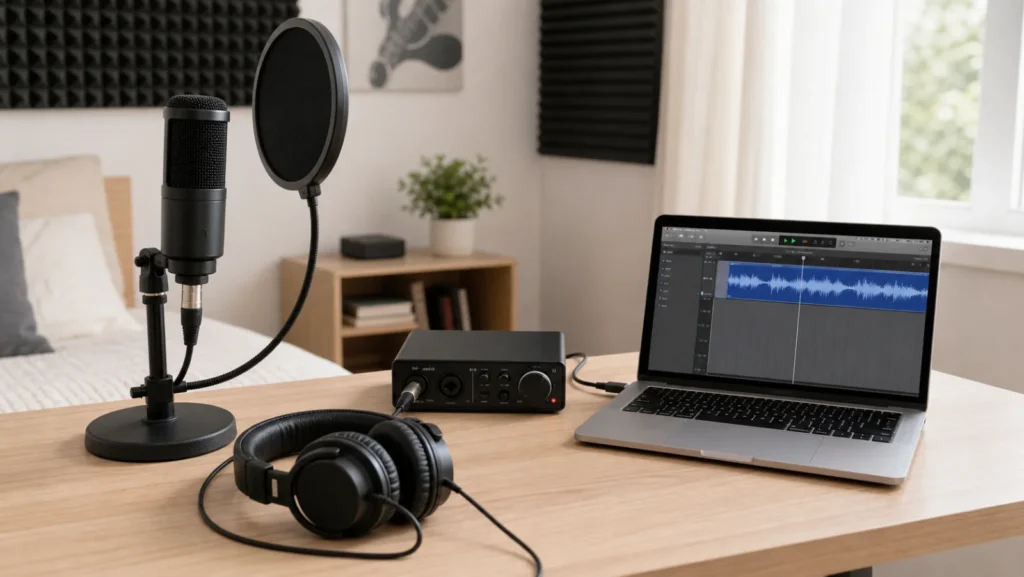
After phone vocal demos, buy the upgrade that fixes your biggest recording problem first. For most beginners, the safest order is stable placement, closed-back headphones, a dedicated microphone path, and then an audio interface or accessories only when the setup needs them.
Do not start with studio monitors, plug-ins, expensive acoustic panels or a complex bundle if the phone demo already shows the real problem is distance, noise, clipping or inconsistent takes.
Evidence boundary: this is an editorial buying-priority guide. It does not claim current prices, stock status, hands-on tests, retailer rankings or brand authorization.
Upgrade order for beginners
| Priority | Buy or fix | Why it comes first |
|---|---|---|
| 1 | Stable position | A stand or stable setup makes every take more repeatable |
| 2 | Closed-back headphones | They help you record to a backing track without speaker bleed |
| 3 | USB mic or USB/XLR dynamic mic | This is the simplest dedicated step beyond a phone mic |
| 4 | XLR mic plus audio interface | This adds flexibility when you want a longer upgrade path |
| 5 | Room-control accessories | They help after placement and mic technique are under control |
Start by fixing repeatability
A phone demo can tell you whether the melody and lyric work, but it rarely gives repeatable vocal placement. If every take sounds different because the phone moves, a stable stand or simple mic position may help before a more expensive microphone does.
If you are still using a phone only for ideas, read Can a Phone Record Good Vocals for Demos?. If you are ready to move beyond it, decide whether you want the simple USB path or a more flexible XLR path.
Choose the microphone path second
A USB microphone can be the shortest path from phone demos to cleaner solo vocals. A USB/XLR dynamic microphone can be even safer if you want USB simplicity now and an interface upgrade later. A normal XLR microphone makes more sense when you already accept the extra setup step of an audio interface.
For the main path decision, use Dynamic Microphone vs USB Microphone for Bedroom Vocals. For untreated rooms, see Best Dynamic Microphones for Untreated Bedrooms.
Do not buy monitors too early
Studio monitors can be useful later for listening and mixing, but they are not the first vocal-recording upgrade for most beginners. You should usually solve headphone monitoring, mic placement and input gain before worrying about speakers in the same room.
When to add an interface
Add an audio interface when you want to use XLR microphones, monitor more comfortably, connect instruments, or build a more flexible home setup. If you are only recording one vocal and want the fastest beginner path, a USB microphone may be enough at first.
If you are considering a kit, compare the bundle logic in Best Audio Interface Bundles for Home Vocal Recording.
What to skip until later
- Studio monitors before closed-back headphones.
- Expensive plug-ins before clean capture.
- Large acoustic purchases before basic room-position tests.
- Complex bundles that include accessories you will quickly replace.
FAQ
What is the first thing to buy after phone demos?
Buy the item that fixes your clearest problem. For many beginners, that is closed-back headphones, a stable stand, or a simple USB/USB-XLR microphone path.
Should I buy a USB mic or an audio interface first?
Buy a USB mic first if you want the simplest solo vocal path. Buy an interface first if you already know you want XLR microphones, instruments or a more flexible setup.
Do I need acoustic treatment before a microphone?
Usually not as the first purchase. Test the quietest room position and basic soft surfaces first, then add treatment only when the recording problem is clearly room reflections.
Where should I go next?
Start at the Home Vocal Recording hub, then choose the mic path and monitoring path that match your room and budget.
Bottom line
Phone demos are useful for deciding whether a song is worth developing. Your first upgrade should make vocals repeatable, monitorable and easier to edit, not simply more expensive.
How We Test
Editorial buying-priority guide based on MusicalCritic beginner home-vocal workflow analysis checked 2026-07-18. This page does not claim hands-on testing, current pricing, stock status, rankings or brand authorization.
Review Basis
MusicalCritic beginner home-vocal workflow analysis and existing internal content map checked 2026-07-18.