
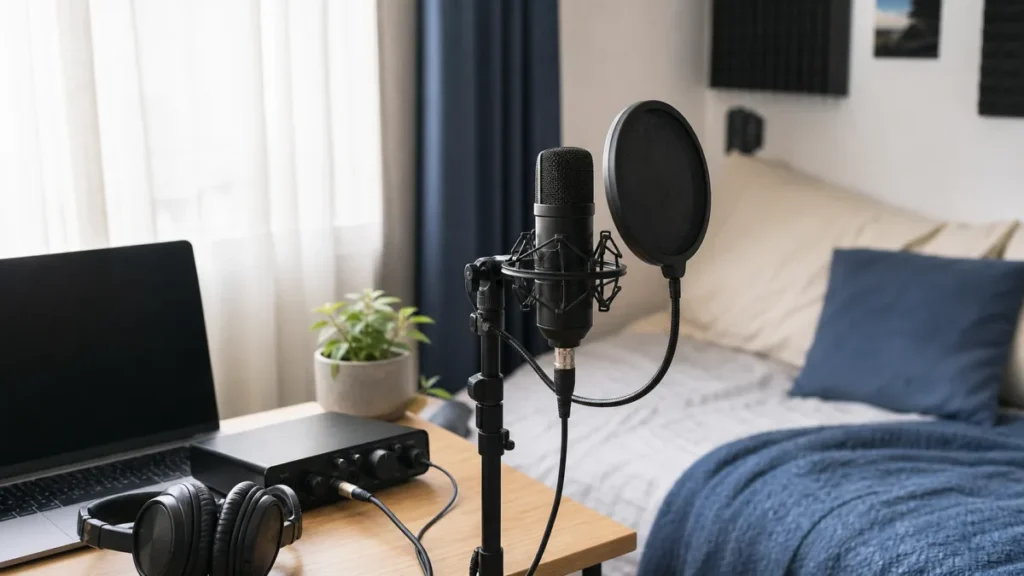
Beginners should buy a condenser mic for vocals only if they can manage room noise, use an audio interface with phantom power when needed, and keep a consistent recording distance. A condenser can capture clear vocals, but in an untreated bedroom it can also capture reflections, fans, keyboard noise and outside traffic.
MusicalCritic may earn a commission from qualifying links. This page uses source-bounded editorial guidance; it does not track real-time offers, availability or seller review scores.
Quick Answer
Choose a condenser mic if you want detailed vocal recordings and can control your space. Choose a dynamic mic if your room is noisy, reflective or shared with a computer fan, street noise or other people.
When A Condenser Makes Sense
- You record in a quiet room with some soft surfaces.
- You want detailed singing, voiceover or acoustic vocal demos.
- You have or plan to buy an interface that provides phantom power for XLR condenser mics.
- You can use a stand, pop filter and headphones instead of holding the mic by hand.
When A Condenser Is The Wrong First Move
- Your room has obvious echo, fan noise, traffic or keyboard clicks.
- You cannot place the mic on a stable stand.
- You expect the mic to fix pitch, tone, room sound or performance problems.
- You need a simple plug-and-record path and do not want an interface yet.
The Untreated-Room Caution
Condenser mics are often sensitive enough to reveal problems beginners do not notice while singing. Bare walls, hard desks, windows and loud laptops can become part of the recording. Before blaming the mic, try moving away from walls, turning off noise sources and placing soft materials behind or around the singer.
Condenser vs Dynamic For First Vocals
| Need | Often easier | Reason |
|---|---|---|
| Quiet room, detailed vocals | Condenser | Captures more detail when the space behaves. |
| Noisy apartment | Dynamic | Can be more forgiving at close distance. |
| USB simplicity | USB mic | Removes interface setup from the first purchase. |
| XLR upgrade path | Condenser or dynamic XLR | Depends on room and voice. |
Read Next
- Home Vocal Recording for Beginners
- Small-Diaphragm vs Large-Diaphragm Condenser for Home Vocals
- How to Record Vocals in an Apartment
FAQ
Does every condenser mic need phantom power?
Most XLR condenser microphones need phantom power from an interface or mixer. USB condenser mics get power through USB.
Will a condenser mic make vocals sound better?
Not by itself. It can capture more detail, but it can also capture more room problems.
What should beginners buy with a condenser?
Plan for a stand, pop filter, XLR cable if needed, closed-back headphones and a quiet recording spot.