
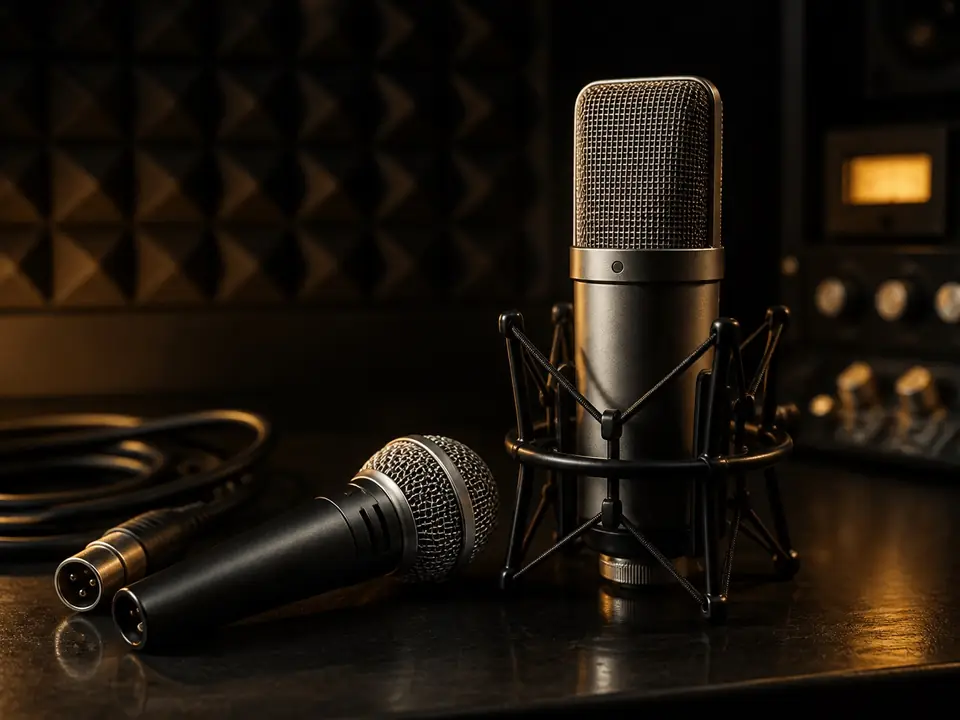
This focused review looks at the Shure SM57 as a home vocal recording microphone, not as a second generic SM57 review. The SM57 is famous as an instrument and stage-workhorse dynamic mic, but bedroom vocal buyers need a different answer: will it help them record usable vocals in a small untreated room?
Quick Verdict
The Shure SM57 can work for home vocal recording when you want a tough dynamic microphone that keeps room sound under control better than many sensitive condensers. It is not the easiest first vocal mic for everyone because it needs close placement, good gain staging, a pop filter or windscreen, and a stable stand. Choose it for close, controlled bedroom vocals; skip it if you want a smoother plug-and-sing vocal sound with less setup discipline.
Home Vocal Fit
- Best fit: singers recording close in an untreated bedroom or apartment.
- Strong use case: rough demos, rock vocals, spoken parts, and users who also record guitar amps or instruments.
- Setup need: pop filter or foam windscreen, stable stand, close distance, and enough clean interface gain.
- Not ideal for: users who want a bright, airy condenser-style vocal without working on placement.
Why It Can Work in Bedrooms
Bedroom vocals often fail because the mic captures too much room, fan noise, reflections, or harsh desk resonance. A dynamic mic like the SM57 usually asks the singer to get closer, which can reduce the amount of room sound in the recording. That makes it useful when the room is the weak point, not the singer.
Where Beginners Struggle
The SM57 is less forgiving if the singer moves around, sings across the mic, or records too far away. It can also need more gain than some beginner interfaces comfortably provide. If the interface is noisy at high gain, the recording may sound dull or hissy even when the microphone itself is not the real problem.
Setup Checks Before Buying
- Confirm your audio interface has enough clean gain for a dynamic microphone.
- Use a pop filter or foam windscreen for close vocals.
- Place the mic slightly off-axis if plosives or harsh consonants are too strong.
- Keep the singer close enough for a solid vocal level without clipping.
- Use closed-back headphones so the backing track does not leak into the mic.
Who Should Buy It
Buy the SM57 for home vocals if you want a durable dynamic mic that can also handle instruments and if you are willing to learn mic placement. It is especially sensible when the room is untreated and you would rather control the recording environment before buying a sensitive condenser microphone.
Who Should Skip It
Skip it if you need the simplest vocal-only setup, if your interface struggles with gain, or if you want a more polished vocal tone before learning placement. In those cases, a USB vocal mic, an SM58-style vocal dynamic, or a beginner condenser setup may be easier to manage.
Alternatives
- Choose the SM58 if vocals are the main job and you prefer a built-in vocal grille.
- Choose the AT2020 if your room is controlled enough for a more sensitive condenser sound.
- Choose a USB mic if simple setup matters more than upgrade flexibility.
- Choose an entry dynamic vocal mic if you want less setup discipline than the SM57.
Useful Next Steps
For the broader product context, read the main Shure SM57 review. If you are deciding between two Shure dynamics, compare SM58 vs SM57. If you are comparing the SM57 against a condenser, read SM57 vs AT2020. For beginner setup basics, start with the vocal recording setup checklist and the home vocal recording hub.
FAQ
Is the Shure SM57 good for bedroom vocals?
Yes, it can be good for bedroom vocals when used close with a pop filter or windscreen and enough interface gain. It is not automatically better than every vocal mic, but it can reduce room pickup compared with many sensitive condensers.
Do you need a pop filter with an SM57 for vocals?
For close vocals, yes. A pop filter or foam windscreen helps control plosives and gives the singer a more consistent distance cue.
Is the SM57 easier than a condenser for untreated rooms?
Often it is more forgiving of untreated rooms because it encourages close placement and usually captures less room detail. The tradeoff is that you must manage gain and positioning carefully.
Review Basis
Review basis: This focused review is based on MusicalCritic editorial research, known dynamic-microphone workflow considerations, beginner home vocal constraints, and scenario analysis. It does not claim hands-on testing, live price tracking, stock status, or brand authorization.