
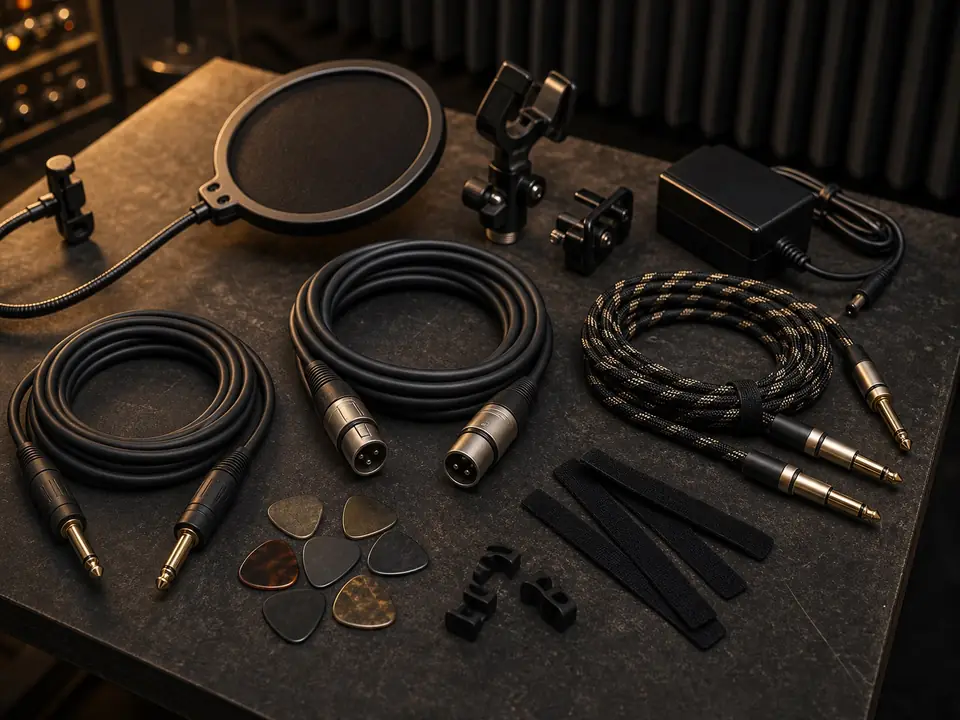
A practical guide to XLR, TS, TRS, USB, and speaker-style cable decisions for beginner home studios.
Short Answer
Most beginner home studios need fewer cable types than they expect, but the right cable type matters for microphones, instruments, monitors, and interfaces.
Who This Helps
Beginners buying microphones, guitars, audio interfaces, headphones, and small studio accessories.
Common Misunderstanding
Advanced wiring projects, permanent studio installations, or live sound snake systems.
Practical Checks
- Use XLR for most XLR microphones.
- Use instrument cables for guitar or bass into an instrument input.
- Use the monitor cable type required by your speakers and interface outputs.
What to Read Next
- Buy fewer reliable cables first instead of large mystery bundles.
- Label cables if the setup grows.
- Check connector shape and balanced/unbalanced needs before ordering.
FAQ
Can XLR cables be used for guitars?
Generally no. Guitars normally use instrument cables, not standard XLR microphone cables.
Do expensive cables improve home studio sound?
Reliability and correct type matter more than exaggerated sound claims for most beginner setups.
Review basis: This page is based on editorial research, manufacturer-visible product positioning, common setup needs, and MusicalCritic editorial judgment. It does not claim hands-on testing, real-time pricing, stock status, ratings, or fixed rankings.