
Short Answer
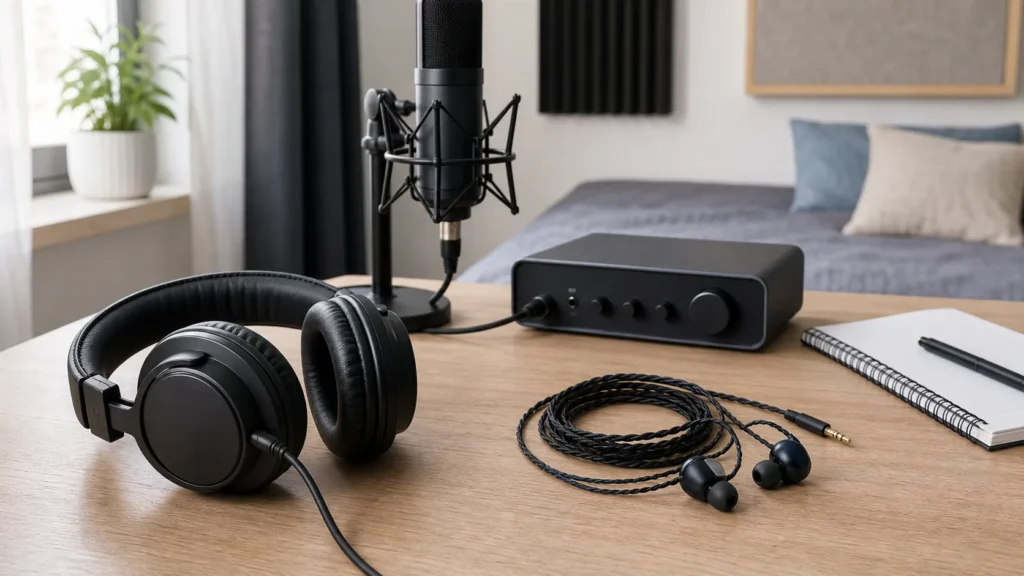
Yes, wired in-ear monitors can work for home vocal recording, especially when headphone bleed is a serious problem. They can keep cue audio closer to the ear and away from the microphone.
Most beginners should still start with closed-back headphones. Headphones are easier to fit, easier to share, quicker to remove, and usually simpler during short learning sessions.
Evidence boundary: this is an editorial beginner FAQ. It does not claim measured isolation, hands-on in-ear monitor testing, current pricing, stock status, rankings, or brand authorization.
When in-ear monitors make sense
In-ear monitors make sense when your silent bleed test keeps capturing click, drums, or guide vocals even after lowering headphone volume and improving fit. They can also help if closed-back headphones feel heavy or interfere with singing posture.
Before switching, run How to Check Headphone Bleed Before Recording Vocals. If the test does not show a real bleed problem, a new monitoring style may not be the best next purchase.
Why headphones are still easier first
| Factor | Closed-back headphones | In-ear monitors |
|---|---|---|
| Fit | Usually quick | Depends on ear tips and comfort |
| Sharing | Easier | Less convenient and more hygiene-sensitive |
| Bleed control | Good if sealed and not too loud | Can be very good when fit is right |
| Beginner setup | Simple | More fit and cable decisions |
What to check before buying IEMs
- Can you record at a lower headphone volume first?
- Is the bleed coming from the click, drums, or guide vocal?
- Do you need to share monitoring with another singer?
- Will the cable rub against clothing or the microphone stand?
- Can you return them if the ear tips do not fit?
When to skip in-ear monitors
Skip them if you are still learning basic gain, mic distance, and room placement. Skip them if you dislike ear-tip fit, need to hand the monitoring to another person quickly, or only have faint bleed that does not affect editing.
For the full monitoring comparison, read Closed-Back Headphones vs In-Ear Monitors for Home Vocals.
FAQ
Are in-ear monitors better than headphones for vocals?
Not automatically. They can reduce bleed when fit is good, but closed-back headphones are usually easier for beginners.
Can cheap earbuds work?
They can work for rough demos if they do not leak badly and you can sing comfortably, but they may have fit, cable, and sound-balance limits.
Should I use one ear out?
Be careful. One-ear monitoring can increase spill from the exposed side and make pitch or timing feel different. Test before using it for a final take.
Where should I go next?
Start with Best Closed-Back Headphones for Beginner Vocal Recording if you have not solved the basic monitoring path yet.
Bottom line
In-ear monitors can work for home vocal recording, but they are a targeted fix. Beginners should prove that headphone bleed or comfort is the real blocker before switching away from closed-back headphones.
How We Test
Editorial beginner FAQ based on MusicalCritic home-vocal workflow analysis checked 2026-07-19. This page does not claim measured isolation, hands-on IEM testing, current pricing, stock status, rankings, or brand authorization.
Review Basis
MusicalCritic beginner home-vocal workflow analysis checked 2026-07-19; no measured isolation or live retailer data used.