
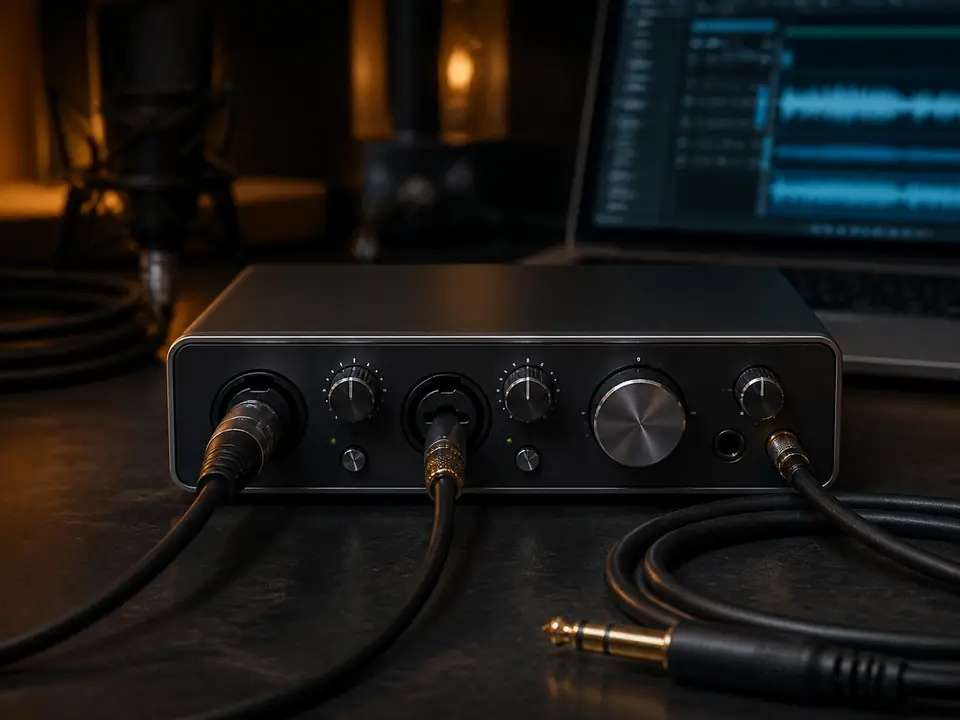
A guitarist-focused guide to choosing an audio interface for DI recording, amp software, direct monitoring, and quiet home practice.
Answer First
For guitar, the useful interface is the one with a proper instrument input, stable monitoring, and enough flexibility for the way you record.
Best For
Guitarists recording DI tracks, using amp software, or building a quiet home practice rig.
Not For
Players who only need a standalone amp and do not plan to record into a computer.
What to Check Before Buying
- Confirm the interface has an instrument or Hi-Z input for direct guitar recording.
- Check monitoring options before assuming software effects will feel latency-free.
- Decide whether one input is enough or whether vocal plus guitar recording requires two.
Alternatives to Consider
- A one-input interface can fit solo DI recording.
- A two-input interface is better for vocal plus guitar workflows.
- A small mixer is different from an interface and is not always the right recording path.
FAQ
Can you plug a guitar straight into an audio interface?
Yes, if the interface has an instrument input intended for guitar or bass-level signals.
Does an interface remove latency?
Not by itself. Driver setup, buffer size, monitoring path, and amp software all affect how much delay you feel.
Review basis: This page is based on editorial research, manufacturer-visible product positioning, common setup needs, and MusicalCritic editorial judgment. It does not claim hands-on testing, real-time pricing, stock status, ratings, or fixed rankings.