
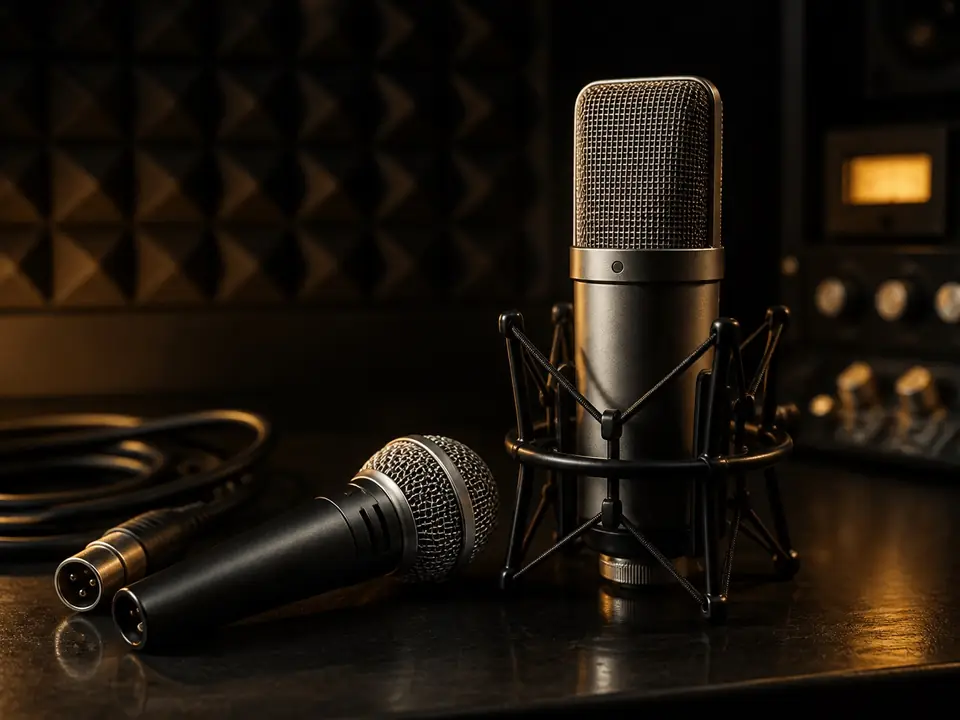
Quick answer: Your first microphone should match your room and workflow. A USB microphone is simple, while an XLR microphone with an audio interface gives you more upgrade room.
Start with the room
If your room has echo, traffic noise, or a computer fan nearby, a dynamic microphone is usually easier to manage. If your room is quiet and controlled, a condenser microphone can capture more detail.
USB vs XLR
USB is convenient for quick recording. XLR is better when you want to build a flexible setup with an audio interface, better cables, and future microphone upgrades.
Do not forget accessories
- A stable microphone stand.
- A pop filter for vocals.
- A good XLR or USB cable.
- Closed-back headphones for monitoring.
Related hubs: Microphones, Headphones, and Audio Interfaces.
Review Basis
Editorial research and visible setup guidance. No hands-on testing, real-time pricing, stock status, ratings, or fixed rankings are claimed.